Most people have no idea what’s coming. Ray Dalio, one of the most successful investors on the planet, is sounding the alarm about America’s future. Not in a doom-and-gloom way, but in a strategic way that every man needs to hear.
Because if Dalio is right, the next 3 to 5 years will separate the men who rise… from the ones who get financially crushed.
Today I’m going to break down exactly what Dalio predicts for the United States, what’s already happening behind the scenes, and most importantly, how you, as a man, can prepare, protect yourself, and thrive.
Let’s get into it.
The Big Warning
Dalio says the United States is heading into a perfect storm.
A storm made of three forces:
Massive government debt
Internal conflict and political division
A shifting global order
He calls it the “economic heart attack.” Not a collapse, not the end of the world, but a moment where the system gets squeezed so hard that something breaks.
And here’s the crazy part.
Most men won’t even see it coming because they’re too distracted, too comfortable, and too dependent on one income stream.
But I’m going to make sure you’re not one of them.
What Dalio Thinks Will Happen
Here’s the short version of Dalio’s predictions.
1. The U.S. will face a serious debt problem.
Debt is growing faster than income. That always leads to pain. Either inflation rises again, taxes increase, or benefits get cut. When the government can’t borrow enough, it prints money. And when money gets printed, the value of your savings drops.
2. The dollar will slowly lose its absolute dominance.
Not disappear, not collapse. But other countries like China, India, and the Middle East will trade more in their own currencies. That means less power for America globally.
3. U.S. markets will stay strong… but way more volatile.
Dalio says the next decade will not be the smooth ride of the last decade. Expect big swings, big corrections, and big opportunities.
4. AI and tech will keep growing, but some of it is a bubble.
Certain AI stocks are real. Others are hype. Dalio literally said “this reminds him of the dot com era.”
5. The gap between the strong and the weak will get bigger.
Financially. Emotionally. Skill-wise. Men who adapt will thrive. Men who don’t will get crushed.
What This Means For You
Now here’s the part that matters.
What should a man do to prepare?
What should YOU do?
Here are the 5 strategic moves Dalio would tell you if you were sitting across from him.
1. Diversify Or Die
Dalio’s number one rule is simple.
Don’t be dependent on any single thing.
Not one job.
Not one investment.
Not one country.
Not one woman.
Not one source of income.
Men who fail put all their weight on one branch.
Strong men build multiple pillars that hold them up.
2. Get Out of the Consumer Mindset
Dalio says most of America is drowning in debt because men are taught to spend and consume, not build and produce.
If your identity is built around comfort, you’re done.
If your identity is built around capability, you win.
Shift from consuming to creating.
Create products.
Create skills.
Create opportunities.
Create value.
That’s how you make yourself untouchable.
3. Own Hard Assets
Dalio recommends owning things that don’t depend on the government staying stable.
That includes:
Gold
Real estate
Commodities
Cash-flowing businesses
Your own skills
This is how kings protect their kingdom.
4. Upgrade Your Skills Fast
Dalio says the number one investment is your ability to produce value.
Not gold.
Not ETFs.
Not crypto.
Not stocks.
Your skills.
Skills are inflation-proof.
Skills are recession-proof.
Skills are country-proof.
The men who thrive in turbulence are the ones who know how to lead, persuade, sell, connect with people, and adapt.
That’s why I teach this stuff. Because when you have confidence, social intelligence, and entrepreneurial skills, you can walk into any room, any city, any situation, and create opportunity.
That’s freedom.
5. Put Yourself in Environments Where You Grow
Dalio says decline happens when a country, a company, or a person refuses to evolve.
So ask yourself:
Are you surrounded by people who challenge you?
Or people who distract you?
People who level you up?
Or people who weigh you down?
If you want to survive the next decade, you need a tribe.
You need mentorship. You need brotherhood. You need a network of men who push you to rise.
No man survives a storm alone.
The kings who rise are the ones who prepare their army early.
Final Thoughts
Ray Dalio isn’t predicting doom. He’s predicting change.
Massive change
And change creates winners and losers.
The question is… Which one are you going to be?
Check out our mentorship program(click the banner below) or join one of our live workshops where you practice in person with trained models.
Want Live Coaching? Book a free 15 Minute Consultation Call
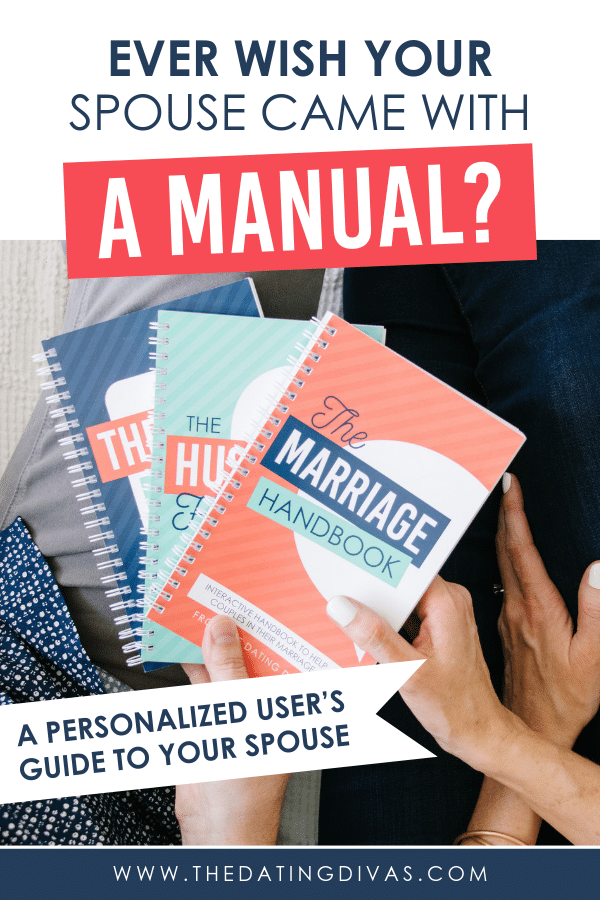
Ever Wish Your Spouse Came With an Instruction Manual?
Have you ever caught yourself thinking:
“Why won’t my husband just communicate?”
“My wife expects me to read her mind, but I’m not a mind reader!”
“I wish I knew what my spouse secretly wants and needs from me.”
“Why does my spouse do that?”
“If only there was a guide to understanding women’s brains.”
“I wish my husband would just talk and tell me what’s on his mind.”
If so, you’re definitely not alone.
One of the biggest challenges in marriage is that we’re expected to build a life with another person without ever receiving a personalized guide to how they think, communicate, feel loved, handle stress, or experience connection.
There are thousands of marriage books that offer advice for husbands and wives. And while many of them are helpful, they all have one major limitation:
Your spouse isn’t “most people.”
Your spouse is uniquely them.
That’s exactly why we created the Marriage Handbooks.
The Marriage Handbooks: A Personalized User Guide for Your Spouse
Imagine if your spouse could hand you a custom-made handbook that explained:
What makes them feel loved
How they prefer to communicate
What hurts their feelings
What they wish you understood
Their biggest relationship needs
What helps them feel appreciated
How they handle conflict
What they secretly wish you knew
That’s exactly what these handbooks help you create.
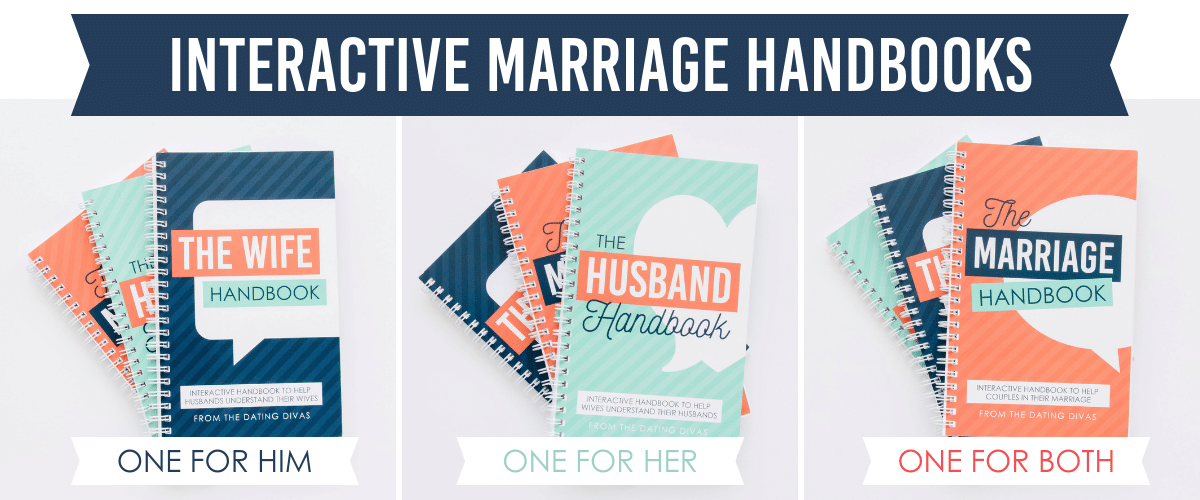
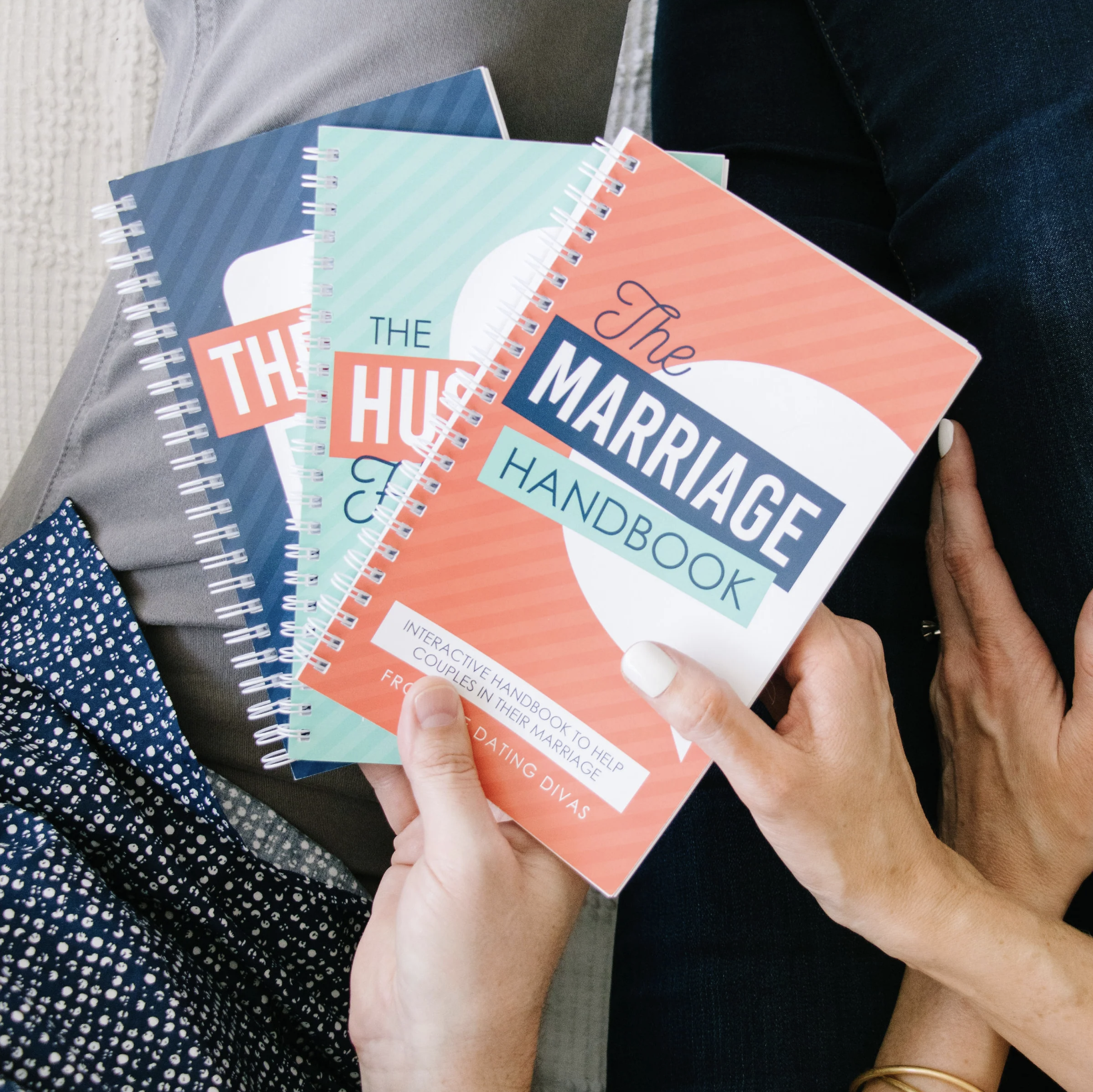
The Marriage Handbook Set includes 3 books:
The Husband Handbook
The Wife Handbook
The Marriage Handbook
Together, they become a personalized roadmap to a happier, more connected marriage.
HOW IT WORKS (Turn Sound On!)
Step 1: Fill Out Your Own Handbook
The husband fills out the Husband Handbook.
The wife fills out the Wife Handbook.
Don’t worry- you aren’t staring at blank pages trying to write a novel.
We’ve done the hard part for you.
Each handbook is packed with thoughtful prompts, quizzes, fill-in-the-blank sections, reflection questions, and guided activities designed to help you identify what’s most important to you.
You’ll simply answer the questions and personalize the book as you go.
You can even highlight sections, circle important ideas, and write notes in the margins like:
“This is really important to me.”
“I don’t think I’ve ever told you this.”
“This is how I feel most loved.”
“I wish you knew this about me.”
It’s simple, meaningful, and surprisingly fun.
Step 2: Swap Handbooks
This is where the magic happens!
Once you’ve completed your handbook, you’ll trade books with your spouse.
Now instead of trying to guess what your spouse wants, needs, or feels, you’ll have a guide written by the person who knows them best.
Them.
You’ll gain insights into how they think, what matters most to them, and how you can love them better in ways that are meaningful to them.
It’s like finally getting access to the operating manual you’ve always wished existed.
Step 3: Complete the Marriage Handbook Together
After you’ve read each other’s personal handbooks, you’ll move on to the Marriage Handbook.
This third book is designed for couples to work through together.
It helps you:
Get on the same page
Strengthen communication
Understand each other more deeply
Create shared goals
Build a stronger partnership
Instead of focusing on “you versus me,” it helps you create a stronger “us.”
Why Couples Love It
Unlike traditional marriage books, these handbooks aren’t filled with generic advice that may or may not apply to your relationship.
They’re personalized.
They’re interactive.
And most importantly, they’re created by the two people who matter most- YOU and your spouse.
Couples love the Marriage Handbook Series because it:
Creates meaningful conversations
Makes communication easier
Helps spouses feel seen and understood
Reveals needs that often go unspoken
Strengthens emotional connection
Reduces misunderstandings
Feels more like a date night activity than relationship homework
The Closest Thing to Reading Your Spouse’s Mind
No, your spouse doesn’t actually expect you to be a mind reader.
But they probably do wish you understood them better.
And chances are, you wish the same thing.
The Marriage Handbooks bridge that gap by giving each spouse a safe, guided, and engaging way to share what’s really going on inside their head and heart.
Because marriage may not come with a handbook…
But your spouse can!
Ready to create your personalized spouse user guide and discover what your husband or wife has always wanted you to know?
Grab the Marriage Handbook Set and start building deeper understanding, better communication, and a stronger marriage- one page at a time.
Marriage Handbooks
Introducing… THE MARRIAGE WORKBOOKS! A set of THREE different workbooks designed to bring a couple closer together than ever before.
Most of us were never really taught this stuff, not properly. So it’s no surprise that so many people reach adulthood still guessing when it comes to intimacy, communication, and desire.
The most important sexuality tips come down to three things: knowing yourself, communicating openly, and respecting boundaries, yours and your partner’s. Everything else builds from there. Whether you’re new to dating, meeting someone through an app, or in a long-term relationship, these foundations matter for everyone.
Why Sexuality Isn’t Just About the Physical
Extractable insight: Sexuality is about self-awareness, emotional connection, and communication, not just physical experience.
Sexuality is more than sex. It includes how you feel about your body, what you find attractive, how you connect emotionally, and how you express desire. Research in human sexuality shows that sexual self-concept – how you see yourself as a sexual person – directly shapes confidence, relationship quality, and how you communicate with partners.
When people think of “sexuality tips,” they often jump straight to technique. But the real foundation is self-awareness. People who understand their own desires and values tend to have more satisfying relationships, and communicate more clearly in them.
Real intimacy starts with trust, communication, and feeling safe with someone
Know Yourself First
Extractable insight: Self-awareness is the foundation of sexual confidence.
Understand Your Desires Without Judgment
Before you can connect with someone else, you need to understand what you actually want. Sexual shame is one of the most common blockers of intimacy – and it’s often absorbed from culture or upbringing, not from personal experience.
Spend time reflecting on what you enjoy, not just what you think you “should” enjoy
Notice what makes you feel safe, excited, or uncomfortable
Recognize that desire naturally shifts over time. That’s completely normal
On dating apps, pay attention to how you describe yourself and what you’re drawn to. These are often honest signals about your values.
Know Your Boundaries Before You Need Them
Boundaries are not walls. They’re clear signals about what works for you. Psychologists note that people who define their boundaries in advance are significantly better at communicating them under pressure.
Think about your physical, emotional, and privacy boundaries separately
Practice saying “I’m not comfortable with that” in low-pressure settings
Revisit your boundaries as your relationship evolves. They’re allowed to change
If you’re dating someone new, it’s okay to set expectations before you meet in person
Sexual Communication Tips That Actually Work
Extractable insight: Couples who talk openly about sex consistently report higher satisfaction than those who don’t.
A study found that sexual self-disclosure was one of the strongest predictors of long-term relationship quality. Yet most people find it one of the hardest conversations to start. Especially early in dating.
How to Bring It Up Without Making It Awkward
Start outside the moment Bring up preferences during a calm, low-pressure time, not in the middle of intimacy. A walk, dinner, or even a relaxed text exchange works.
Use “I” language “I really enjoy...” lands better than “you never…” It invites connection instead of defensiveness.
Try: “I feel closest to you when we take our time.“
Avoid: “You always rush through things.”
Ask curious questions Genuine questions show interest and open a two-way conversation. For example:
“What do you enjoy most during intimacy?“
“What makes you feel most comfortable?”
“Is there something you’ve always wanted to try but haven’t mentioned?“
Normalize check-ins A simple “How was that for you?” after intimacy builds trust and comfort over time. It also removes the pressure of getting everything “right” on the first try.
Understanding Consent in Relationships
Extractable insight: Consent must be continuous, not assumed – it can change at any point.
Consent isn’t just about the first “yes.” It’s a continuous, two-way dialogue. The RAINN consent framework describes it as freely given, reversible, informed, enthusiastic, and specific – meaning one situation doesn’t automatically apply to another.
Check in verbally during intimacy, especially with a new partner
Pay attention to non-verbal cues. Hesitation or silence is not a “yes”
Make it normal to pause and confirm rather than assume
Respect a “no” or “not right now” without pressure or disappointment
In early dating stages, including app conversations, be mindful of pushing for things the other person hasn’t brought up
This applies to all relationship types and orientations equally.
Sexual Compatibility: What It Really Means
Extractable insight: Sexual compatibility is built through communication and curiosity. Not found through luck.
Sexual compatibility isn’t about matching someone perfectly. It’s about the ability to bridge differences with empathy. The Gottman Institute notes that couples with mismatched desire levels can still build satisfying intimacy when they approach differences with curiosity rather than frustration.
Signs of Good Sexual Compatibility
You can talk about what you want without fear of judgment
You’re both willing to explore each other’s preferences, even if different from your own
Disagreements feel like a conversation, not a rejection
There’s mutual effort, not just one person doing all the adapting
You feel safe enough to say both “yes” and “no”
How Body Image Affects Sexual Confidence
Extractable insight: Positive body image is directly linked to higher sexual satisfaction and fewer communication barriers.
Research published in the Journal of Sex Research found that people with more positive body image report higher sexual satisfaction, greater confidence, and fewer communication barriers with partners. This isn’t about having a “perfect” body. It’s about feeling at home in the one you have.
Notice when you’re criticizing your body and gently redirect to what it can do or feel
Choose partners and environments that make you feel respected and at ease
Avoid comparing your sex life to what’s shown in media or pornography. Neither reflects reality
If you’re meeting someone from a dating app for the first time, remember: they chose to meet you
For People Exploring Their Sexuality
Extractable insight: There is no timeline for self-discovery, people explore and redefine their sexuality at any age.
Many people reach adulthood without ever having space to honestly explore their sexuality. Whether you’re questioning your orientation, exploring gender identity, or simply figuring out what you want… that’s a valid and important process.
There’s no deadline. People come out and redefine themselves in their 30s, 40s, and beyond.
You don’t need a label to start. Curiosity itself is enough.
Seek communities or therapists that affirm your experience rather than judge it.
Dating apps can actually be a low-pressure space to explore what you’re looking for before committing to anything.
Sexuality and Mental Health Are Linked
Extractable insight: Stress and anxiety directly suppress sexual desire. It’s biological, not personal.
Stress, anxiety, and depression all affect desire, arousal, and intimacy. Cortisol, the stress hormone, actively suppresses sexual desire. If your interest in sex has changed, it’s worth looking at your overall mental and physical health before assuming something is “wrong”.
Talk to a doctor if you notice sudden or lasting changes in desire
Communicate with your partner when stress is affecting intimacy. Don’t go silent without explanation
Therapy, individual or couples, is a legitimate tool for sexual wellbeing, not a last resort
Common Mistakes People Make and How to Avoid Them
Extractable insight: Most intimacy problems come from avoidable communication habits, not incompatibility.
Assuming your partner knows what you want
Even in long relationships, people change. What worked before may not work now. Ongoing check-ins matter more than assuming things are still the same.
Treating rejection as personal failure
A partner saying “not tonight” is rarely about you. Low desire is often tied to stress, health, or mood — not attraction. Taking it personally creates distance fast.
Avoiding the conversation because it feels awkward
The awkwardness of one honest conversation is almost always smaller than the resentment that builds from months of silence. Start small, one genuine question is enough to open the door.
Comparing your sex life to others’
There’s no universal “normal” for frequency or style. Research shows that satisfaction matters far more than frequency. Couples who feel genuinely connected report fulfillment regardless of how often they’re intimate.
Ignoring your own needs to please a partner
Consistently setting aside your own desires leads to frustration and slow disconnection. A good partner wants to know what you enjoy, not just what you’ll tolerate.
Quick Summary: What to Take Away
Self-awareness comes first: understand your desires and boundaries before anything else
Communication is the skill that matters most: more than technique or experience
Consent is ongoing: not a single permission, but a continuing conversation
Compatibility is built, not found: curiosity and empathy close most gaps
Body image affects intimacy: self-acceptance has real, measurable benefits
Mental health and sexuality are connected: stress and anxiety affect desire directly
Exploration has no deadline: there’s no wrong time to understand yourself better
Most intimacy problems are avoidable: they come from silence, not incompatibility
Frequently Asked Questions
Have questions about intimacy? You’re not alone, and the answers are simpler than you think
Is it normal for sexual desire to change over time?
– Yes, completely. Desire naturally fluctuates due to stress, hormones, relationship changes, health, and age. A shift in libido doesn’t mean something is wrong. It’s one of the most common human experiences. If changes are sudden or causing distress, speaking to a doctor is a good first step.
How do I talk to my partner about sexual preferences without it feeling awkward?
– Start outside of intimate moments – over dinner or on a walk is often easier. Use “I” statements rather than criticism, and frame it as curiosity: “I’ve been thinking about what I really enjoy…” keeps the tone open rather than confrontational. One honest conversation tends to make the next one easier.
What if my partner and I have different levels of sexual desire?
– Mismatched desire – sometimes called desire discrepancy – is one of the most common challenges in relationships. It doesn’t mean you’re incompatible. Couples who communicate openly about it and find middle-ground approaches, rather than ignoring the gap, tend to work through it successfully.
How do I know if I’m focusing too much on my partner’s needs and not my own?
– A good signal is whether intimacy consistently leaves you feeling unfulfilled, resentful, or invisible. Healthy intimacy involves mutual attention. If you’re always the one adapting and never being asked what you want, that’s worth addressing directly.
Is it okay to still be figuring out my sexuality as an adult?
– Absolutely. There’s no age limit on self-discovery. Many people come out, explore, or redefine their sexuality in their 30s, 40s, or later. What matters is that you’re giving yourself permission to be honest, not that you arrived at an answer by a certain point.
Can therapy actually help with sexual issues?
– Yes. Sex therapy and couples counseling are evidence-based approaches with strong track records for issues like mismatched desire, communication breakdown, body image concerns, and past trauma. It’s not a last resort, it’s a practical tool many couples use proactively.
Ready to put this into practice? Meet someone new on Mingle2.com — a free dating site to find real connections
Jane Garnett traded her so-called perfect life for an authentic one. Listen to her story in this episode of Last First Date Radio.
—
Jane Garnett is a Licensed Marriage and Family Therapist with nearly 20 years in practice and the author of the memoir, This Time with Feeling (May 2026). Her work focuses on helping people get unstuck, particularly during life transitions where things look “right” on the outside but don’t feel aligned internally.
In this episode:
That moment when you realize you need to let go of the “perfect life” to have an authentic life
Why so many people feel stuck, even when they’ve done everything “right”
How to tell the difference between a phase of discomfort and a life that truly needs to change
Our “inherited scripts” and how they shape the lives and relationships we end up in
EP 715: Jane Garnett – Trading the “Perfect” Life for a Real One
Highlights from this episode
Authenticity & embodiment
Authenticity = felt sense in the body; moments of “yum/peace/connection” indicate being in alignment.
Many people confuse curated appearances (social media, careers, roles) with authentic living.
Authenticity is an ongoing practice of uncovering childhood clues, dreams, and sensory pleasures.
Balance between external expectations and inner truth: aim for “most true” rather than a single right answer.
Mirror work, humor, and self-compassion help reunite with the body and reduce self-judgment.
Relationship choices: resonance vs. responsibility
Decisions about staying or leaving should weigh two metrics: resonance (feels true in the body) and responsibility (willingness to accept consequences).
Leaving isn’t inherently selfish; staying in misery models unhealthy behavior for children.
Growth is ongoing; attracting a new partner often follows personal blossoming but doesn’t guarantee a problem-free relationship.
Rewriting intergenerational narratives and addressing family atmospheres matter more than legal statuses (divorced vs. married).
Practical practices to reconnect and heal
Small daily practices matter: sensory awareness on walks, creative micro-practices (20 minutes of art/writing), and “morning pages.”
Embodiment techniques: body scans, mindful walking, dance, sensory play (touching leaves, smelling flowers).
Rest and regulation: Yoga Nidra recommended for deep restorative rest and resetting when burned out.
Therapeutic tools: attachment-focused EMDR for early-family patterns; mirror work for self-acceptance.
Use micro-experiments to test choices (imagine scenarios in the body to see “yes” vs “no”).
Connect with Jane
Watch this episode on YouTube
Please subscribe/rate and review the podcast here.
If you’re feeling stuck in dating and relationships and would like to finally find love, apply for a complimentary 30-minute love breakthrough session with Sandy https://lastfirstdate.com/application
SHE FORGOT SHE HAD A DATE WITH HIM – AND MORE…Also, download/play the episode here (or below) and get your free 7 day dating course here and a free sample week in the Doc Love Club PLUS GET 10% OFF THE BOOK THAT’S CHANGED THOUSANDS OF LIVES – THE SYSTEM/DATING DICTIONARY. Oh, you should be a Doc Love Club Member too & check out FREE […]