As a dating and relationship coach, there is something I sometimes feel I should explain:
I’m single too.
And actually, I’m no longer embarrassed to say that.
There can be an assumption that if you’re a relationship coach, you must have everything completely figured out in your own love life.
But that’s not how life works.
Being a coach doesn’t make you immune to disappointment, vulnerability, rejection, uncertainty or the very human desire to meet someone you genuinely connect with.
What it does give me is the opportunity to understand relationships differently — to look at the patterns, beliefs and behaviours that can sometimes get in the way of the connection we really want.
And being single has taught me a lot.
Being single doesn’t mean something is wrong with you
I think many people quietly carry the belief that if they were more attractive, more confident, more successful, more interesting or simply “better”, they wouldn’t still be single.
I don’t believe that’s true.
Being single isn’t a diagnosis.
It doesn’t automatically mean you’re doing something wrong.
And it certainly doesn’t mean you’re destined to be alone.
Sometimes life simply doesn’t unfold according to the timeline we imagined for ourselves.
That can be difficult, particularly when it seems as though everyone around you is coupled up.
Dating can make even confident people feel insecure
You can be confident at work and still feel nervous on a date.
You can be successful, sociable and independent and still wonder:
Does he like me?
Does she find me attractive?
Why hasn’t he messaged?
Why do I keep choosing the wrong people?
What’s wrong with me?
Dating has a way of bringing our vulnerabilities to the surface.
And I think that’s one of the reasons I love coaching.
Because underneath the dating question is often a much deeper question about how we see ourselves.
I’ve learned that confidence isn’t about never feeling vulnerable
For me, confidence isn’t about walking into every situation knowing that everything will work out.
It’s being able to say:
“This matters to me, and I’m willing to be vulnerable anyway.”
That might mean approaching someone.
Going on a date after a disappointing experience.
Telling someone you like them.
Walking away from something that isn’t right for you.
Or simply putting yourself back out there when part of you would rather stay safely at home.
That’s real courage.
I’ve also learned that chemistry isn’t everything
When we’re looking for love, it’s very easy to focus on chemistry.
That spark.
The butterflies.
The excitement.
The feeling that someone is different.
And chemistry can be wonderful.
But a healthy relationship also needs things like communication, emotional availability, respect, consistency, shared values and the ability to feel safe being yourself.
Sometimes the person who gives you the biggest emotional high isn’t necessarily the person who can give you the relationship you actually want.
That’s something worth paying attention to.
You don’t have to become someone else to be loved
There is an enormous amount of dating advice out there telling us how to behave.
Don’t text too quickly.
Play hard to get.
Say this.
Don’t say that.
Be more mysterious.
Be more confident.
Be more attractive.
And while there can be useful advice in some of this, I don’t believe finding love is about creating a perfect version of yourself.
It’s about becoming more comfortable with who you actually are.
Understanding your patterns.
Knowing what you want.
Being able to communicate.
Having boundaries.
And being willing to let someone see the real you.
So yes, I’m still single
And I’m okay with saying that.
I don’t coach from a place of “I’ve got love completely figured out.”
I coach from a place of curiosity, experience, professional knowledge and a genuine understanding of how complicated relationships can be.
I know what it’s like to want a relationship.
I know what it’s like to put yourself out there.
I know that dating can be exciting, frustrating, funny, disappointing and hopeful — sometimes all in the same week.
And I believe that being single doesn’t mean we have failed.
It means we’re still living our lives, meeting people, learning about ourselves and working out what kind of relationship is right for us.
If you’re single and feeling stuck
Perhaps you’re dating but getting nowhere.
Perhaps you’ve lost confidence.
Perhaps you keep finding yourself in the same relationship patterns.
Perhaps you don’t know how to meet someone who wants the same things you do.
Or perhaps you’re simply tired of doing it all on your own.
You don’t need to have everything worked out before you ask for support.
Coaching isn’t about me telling you how to live your life or giving you a list of tricks to make someone fall in love with you.
It’s about helping you understand yourself, build confidence, recognise your patterns and make choices that move you towards the kind of relationship you genuinely want.
And perhaps that’s something we have in common.
I’m single.
You might be too.
But neither of us has to believe that this is where the story ends.
Ready to talk?
If you’re feeling stuck in your dating or relationship life and would like some support, I’d love to hear from you.
Book a free introductory conversation with me and let’s talk about where you are, where you’d like to be, and what might be getting in the way.
Some couples trends are cute. Some are sweet. And some involve two grown adults army-crawling across the kitchen floor with their hands behind their backs, racing to face-plant into an Oreo cookie.
Guess which one we’re obsessed with. 😂
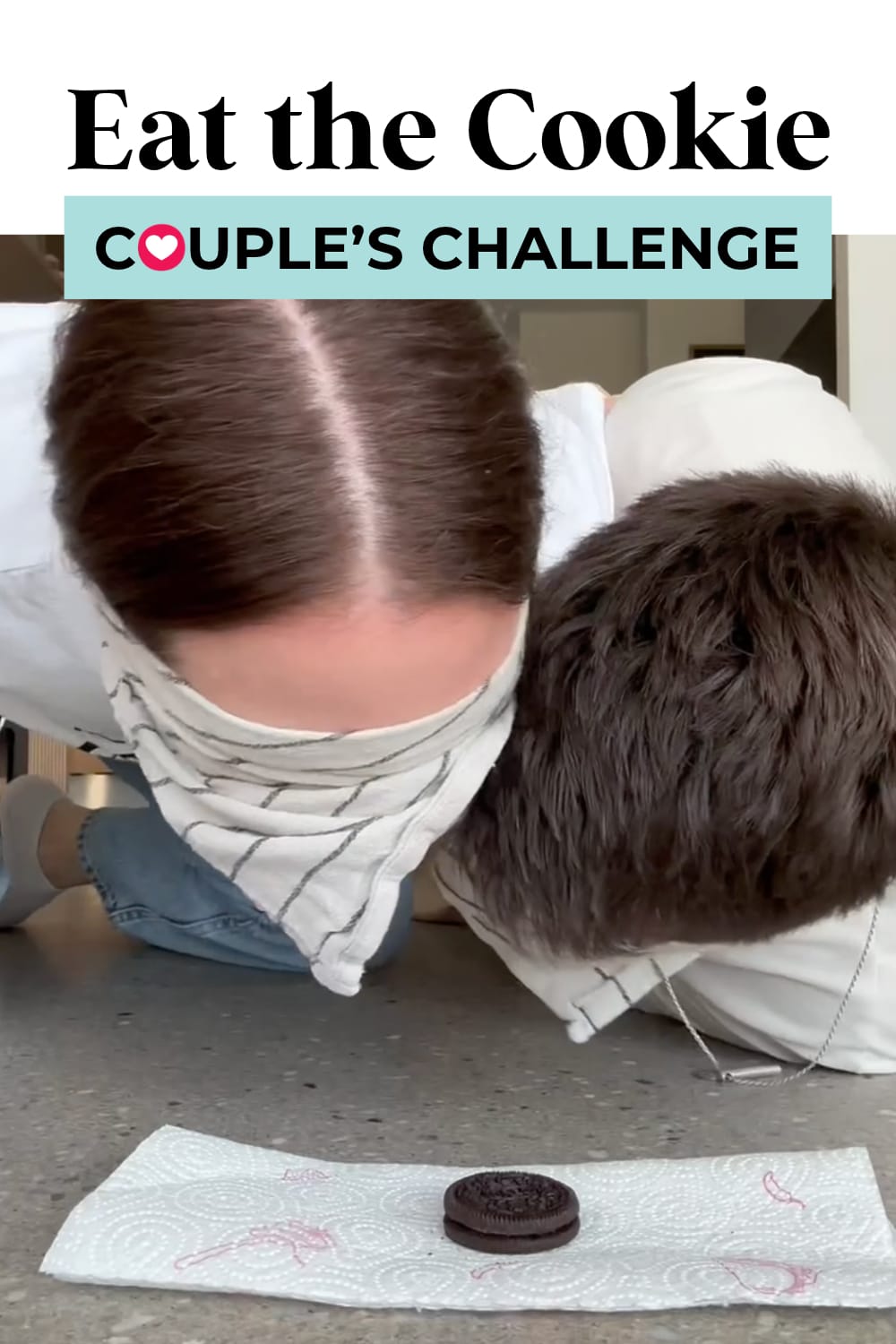
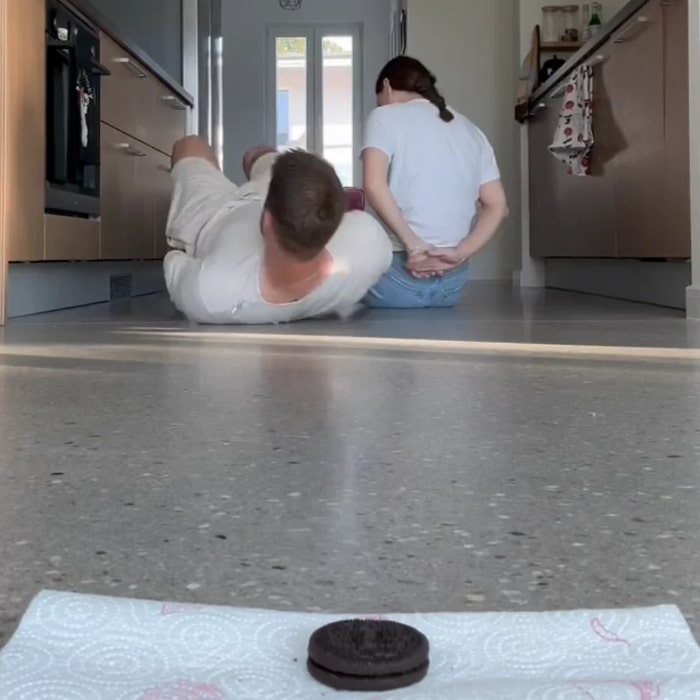
We’re calling it the Eat the Cookie Couples Challenge, and the idea couldn’t be simpler: put a cookie on a paper towel on the floor, then race your spouse to be the first one to eat it. The catch? Every round comes with a new rule. No legs. No arms. No arms AND a blindfold. By round three, all dignity has left the building.
It costs about a dollar, it takes two minutes to set up, and it is one of the fastest ways to get you and your spouse laughing so hard you can’t breathe.
Watch our social media director, Kate, and her husband, Ryan, take on the challenge below, then keep reading for the full rules, 12+ round ideas, scoring and stakes, a family version, and a few tips so nobody ends up with carpet burn.
Turn your sound ON for this one. Trust me. 🔊
What Is the Eat the Cookie Couples Challenge?
The Eat the Cookie Couples Challenge is a silly race where a cookie sits on a paper towel on the floor and you and your spouse compete to be the first to eat it, with a different rule or handicap each round. One round you can’t use your legs. The next you can’t use your arms. Then you can’t use your arms or your eyes. You play several rounds, and whoever eats the most cookies wins.
We’ve seen versions of it all over TikTok and Instagram, but there doesn’t seem to be one official name for it yet. You might see it described as a cookie race challenge, a no hands cookie challenge, or just a couples cookie challenge. Whatever you call it, it’s the same glorious chaos.
Quick note: this is not the viral “cookie challenge” where parents test whether their kids will share a cookie. That one is adorable too, but in this one, the only thing being tested is how fast you can wiggle across the floor. Nobody is sharing. Nobody. 🍪
What You Need for the Eat the Cookie Challenge
Chances are, you already have everything in your kitchen right now:
Cookies — one per round, plus a few extras for “quality control.”
Paper towels — a fresh one for every round.
Open floor space — the living room with the coffee table pushed aside is perfect.
A blindfold — a dish towel, a sleep mask, a scarf, or a tie from the back of the closet.
A referee (optional) — your kids, a friend, or the most honest person in the house. Someone has to yell “GO!” and settle the inevitable disputes.
A phone propped up to record — not required, but you will want to rewatch this. Probably many times.
Milk — for the winner. Or the loser. Or both. It’s cookies. You need milk.
Total cost: about $1 to $5. Total prep: 2 minutes. This is one of those mini date nights that works on a random Tuesday when you’re both tired and just need to laugh.
How to Play the Eat the Cookie Couples Challenge
Set the cookie. Lay a paper towel in the middle of the floor and place one cookie in the center.
Pick your starting spots. Stand or sit an equal distance from the cookie, usually 6 to 10 feet away, on same or opposite sides. Fair is fair.
Announce the rule for the round. The referee reads the rule (no legs, no arms, blindfolded, etc.) and both players get into position.
Ready, set, COOKIE! On “go,” you both race to the paper towel following that round’s rule.
First cookie in the mouth wins. The round is over the moment one of you gets the cookie in your mouth. (Chew slowly afterward. Victory is sweeter when you’re not choking on it.)
Reset and play the next round. Fresh paper towel, fresh cookie, brand-new rule. Keep going until you’ve played every round, then crown your champion.
The Classic Three Rounds (The Ones Kate and Ryan Played)
Round 1: No Legs
Lie on your stomach and keep your legs completely still. You can only use your arms to drag yourself across the floor to the cookie. Think army crawl meets a seal flopping toward a fish. It looks easy. It is not easy. Your arms will have opinions about it tomorrow.
Round 2: No Arms
Hands clasped behind your back. Now you can only use your legs to get there: walk, scoot, waddle, shuffle on your knees, whatever works. The hard part is getting down to the cookie once you arrive. Expect a lot of very undignified bending, a few wobbles, and at least one person going face-first into the paper towel.
Round 3: No Arms + Blindfolded
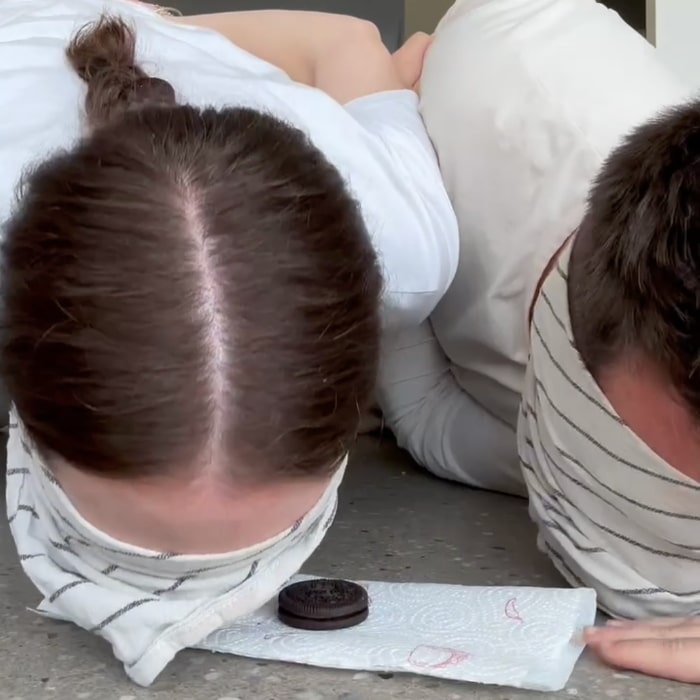
The grand finale. Hands behind your back, blindfold on, and now you have to find the cookie before you can eat it. This is where it gets truly hilarious, because you’re both nosing around the floor like confused golden retrievers while your audience screams directions that may or may not be helpful. (Tip: have the referee spin the cookie’s location a little after you’re blindfolded so nobody can cheat by memorizing it.)
The Best Part of Kate and Ryan’s Video (It’s Not the Cookie)
I won’t spoil who won. Go watch. 😉
But I’ll tell you my favorite part- it’s the sound of Kate and Ryan’s two little girls giggling in the background the entire time. Those excited squeals you can only get from kids watching their parents be completely ridiculous.
And then, in that last blindfolded round, a tiny little hand reaches in to help her mama find the cookie. Is it cheating? Technically, yes. Is it the cutest cheating you’ve ever seen? Also yes. I’m calling it a team effort and allowing it. 🥹
That moment is exactly why we love challenges like this. Your kids don’t just hear that Mom and Dad love each other. They get to see it: two people who still like each other enough to crawl around on the living room floor together, laugh at themselves, and play. That’s a picture of marriage worth giving them.
12 More Round Ideas to Keep the Chaos Going
Three rounds is the classic, but once you start, you won’t want to stop. Write these on slips of paper, toss them in a bowl, and have your referee draw a new rule each round.
The Dizzy Round — spin around 5 times before the referee yells “go.” Walking in a straight line becomes tricky.
The Crab Walk Round — bellies up, hands and feet on the floor. Bonus points if you can eat the cookie without collapsing.
The Worm Round — lie on your stomach, arms glued to your sides, and inch-worm your way there. No arms, no knees, just wiggle.
The Back-to-Back Start — start seated back to back with the cookie behind one of you. The other has to get up, run around, and still win. Great for evening the odds.
The Hop Round — one foot only. Hop there, then figure out how to get down to the cookie without putting the other foot down.
The Oven Mitt Round — hands are allowed, but you have to wear oven mitts. Picking up a cookie has never been so hard.
The Slow-Motion Round — you have to move in exaggerated slow motion the whole way. Anyone caught moving at normal speed goes back to the start. (The referee gets ALL the power here.)
The Spouse GPS Round — one of you is blindfolded and the other guides with voice only. Time each run, then switch. Fastest team-up wins. This one is secretly a communication test.
The Backseat Driver Round — both of you are blindfolded and the kids (or friends) shout directions. Each player gets their own “navigator.” Pure, beautiful mayhem.
The Different Rooms Round — start in separate rooms (equally far away, of course). Hearing your spouse thunder down the hallway is half the fun.
The Handicap Round — whoever won the last round starts 3 feet farther back. Keeps things close and keeps the trash talk alive.
The Championship Round — swap the cookie for something messier, like a frosted cupcake, and play no-arms. Winner gets bragging rights and frosting on their nose.
Scoring and Stakes (Because Bragging Rights Matter)
You can absolutely play just for fun. But a little something on the line makes everyone crawl faster.
Keep it simple: one point per cookie eaten. Most points after all rounds wins.
Make the finale count: the blindfolded round (or your championship round) is worth double. Comebacks are always possible.
Pick a prize: loser does the dishes, gives a 10-minute back rub, picks up the kids from practice, or has to plan the next date night.
Go big with the bragging rights: the winner gets an official “Cookie Champion” title for the week, and yes, they’re allowed to bring it up at dinner. Repeatedly.
Tips for the Best (and Safest) Cookie Race
Choose small, soft cookies. Bite-size or soft-baked cookies are easier to eat without hands and won’t explode into a million crumbs. Save the giant crunchy ones for the milk-dunking afterward.
Clear the course. Move coffee tables, toys, shoes, and anything with a sharp corner, especially before the blindfolded rounds.
Protect your knees. Play on carpet or a rug, or throw down a couple of blankets. Hardwood floors are not forgiving to 30-something knees.
No head-butting. When you’re both blindfolded and heading for the same tiny cookie, heads will meet. Go slow at the finish line. Nobody wants to explain a bonked forehead at work tomorrow.
Win first, chew second. Get the cookie in your mouth to win, then take your time chewing. Racing is for the floor, not for swallowing.
Mind any allergies. If you’re playing with kids or friends, swap in an allergy-friendly treat so everyone can play.
Press record. You think you’ll remember how funny it was. You will not do it justice. Get it on video.
Fun Ways to Change It Up
The Family Version — let the kids race Mom and Dad! Give the grown-ups the handicaps (no arms, blindfolded) and let the kids run normally. They will think they are the greatest athletes alive.
The Kids as Judges Version — put your kids in charge of choosing each round’s rule, yelling “go,” and declaring the winner. Prepare for some very creative (and very biased) rulings.
The Double Date Tournament — grab another couple or two, set up a bracket, and play husbands vs. husbands and wives vs. wives before the final showdown. A perfect add-on to your next game night, or make it one of the rounds in our TikTok Couples Challenge Group Date, complete with free printable challenge cards and score cards.
The Holiday Version — use themed treats: candy corn cookies in the fall, decorated sugar cookies at Christmas, a heart-shaped cookie for Valentine’s Day.
The Kids-Are-Asleep Version — same game, different prize. Winner picks how the rest of the night goes. 😉
Why Silly Challenges Like This Are So Good for Your Marriage
On paper, it’s two adults racing to eat a cookie off the floor. But there’s a lot more happening on that living room carpet than you’d think.
Play keeps you close. Somewhere between the bills, the carpool line, and the dishes, a lot of couples forget how to just play together. Ten minutes of pure silliness reminds you that your spouse is also your favorite person to have fun with.
Laughing together is a reset button. It’s really hard to stay grumpy at someone while you’re both crying-laughing on the floor. Shared laughter softens a tense week faster than almost anything.
It’s healthy competition. A little playful rivalry brings out the flirty, teasing side of your relationship that can get buried under the to-do list.
Your kids are watching (in the best way). Just like Kate and Ryan’s girls, your kids will remember the night Mom and Dad crawled across the floor for a cookie. Moments like these show them what a happy, fun marriage looks like.
It requires almost nothing. No sitter, no reservation, no budget. If you’ve been stuck in a date night rut, this is the easiest way out.
More Fun At-Home Date Nights You’ll Love
Can’t get enough of Kate and Ryan? Watch them play the Guess the Number Date, the viral game where you tape a secret number to your spouse’s forehead and ask ridiculous yes-or-no questions.
Want more laughing-till-you-cry?Smash Talk is a funny couples game in the Spark’d app where you battle it out for the wittiest answer.
Love a good race? The YouTube Scavenger Hunt Date sends you both racing through a list of hilarious challenges.
Ready for something sweeter? The Camera Roll Date Night uses two bowls and your phone’s photos to take you down memory lane.
Still have cookie crumbs on your face? Settle in with a cozy Fall Drink Flight, a blind taste test date for about $8.
Working through the alphabet? File this one under C for Cookie Challenge in our Alphabet Dating list of 350+ A-to-Z date ideas.
So tonight, grab a sleeve of cookies and a roll of paper towels, push the coffee table out of the way, and challenge your spouse to a race. Let the kids referee. Let them giggle. And let yourselves be completely, wonderfully ridiculous together. ❤
Play it tonight, then come back and tell us in the comments: which round was the hardest, and who’s your house’s Cookie Champion?
Eat the Cookie Challenge FAQ
Tap any question to see the answer.
What is the Eat the Cookie Couples Challenge?
It’s a silly couples race where a cookie sits on a paper towel on the floor and both spouses race to be the first to eat it. Each round has a different rule, like no legs, no arms, or no arms while blindfolded. You play several rounds and whoever eats the most cookies wins.
What is this cookie challenge called on TikTok?
There doesn’t seem to be one official name yet. You may see it described as a cookie race challenge, a no hands cookie challenge, or a couples cookie challenge. It’s different from the viral TikTok cookie challenge where parents test whether their kids will share a cookie.
What are the rounds in the Eat the Cookie Challenge?
The classic three rounds are: Round 1, no legs, where you pull yourself across the floor with your arms. Round 2, no arms, where your hands stay behind your back and you can only use your legs. Round 3, no arms and blindfolded, where you have to find the cookie without seeing it. Fun extra rounds include a dizzy round, crab walk, oven mitts, and a spouse GPS round.
What kind of cookie works best?
Small, soft cookies work best because they’re easy to pick up and eat without hands and they don’t crumble everywhere. Soft-baked chocolate chip cookies, mini cookies, or Oreos are all great choices.
How far away should you start from the cookie?
Most couples start about 6 to 10 feet away, on opposite sides of the paper towel. The important part is that you both start the same distance away so the race is fair.
Is the blindfolded round safe?
It is as long as you clear the space first. Move furniture, toys, and anything with sharp corners, play on carpet or a rug, and slow down near the cookie so you don’t bump heads. Get the cookie in your mouth to win, then take your time chewing.
Can kids play the Eat the Cookie Challenge?
Yes! Kids love racing their parents, especially when the grown-ups get the handicaps. They also make fantastic referees who choose the rules, yell go, and declare the winner.
How long does the challenge take?
Setup takes about two minutes and each round takes less than a minute. The classic three rounds take around 10 minutes, or plan on 20 to 30 minutes if you add extra rounds and a championship.
Is the Eat the Cookie Challenge a good date night idea?
It’s one of the easiest at-home date nights around. It costs just a few dollars, needs no babysitter, takes almost no planning, and gets you laughing and playing together like you did when you were dating.
Reader Favorites
Our most-loved bedroom games & date-night ideas for couples:
You are probably emotionally ready for a relationship when you can make room for another person without asking them to rescue you, complete you, or erase your past. Readiness does not mean having no fears or emotional baggage. It means having enough stability, honesty, and willingness to build something mutual.
Relationship readiness is less about being perfectly healed and more about having enough capacity, clarity, and willingness to build with someone.
Quick Answer: Emotional readiness is not a flawless state you reach before dating. It is the capacity to be honest about what you want, tolerate normal uncertainty, communicate needs, respect boundaries, and stay curious about another person. You may need more time if dating is mainly an escape from loneliness, a way to prove your worth, or an attempt to replace someone you have not emotionally released.
Key Takeaways
Readiness is about capacity and timing, not perfection.
Wanting a relationship is different from needing one to stop distress.
You can still feel nervous, cautious, or imperfectly healed and be ready.
Clear boundaries, honest communication, and room in your life are stronger signs than excitement alone.
If your past is controlling your present choices, slowing down can be an act of care.
What Does It Mean to Be Emotionally Ready for a Relationship?
Emotional readiness is your present ability and willingness to participate in a close relationship. It includes being open to intimacy, able to consider another person’s needs, and prepared to make choices that support trust over time. It is not a diagnosis, personality type, or permanent label. You can feel ready during one season of life and overloaded during another.
Researchers sometimes call this commitment readiness, a person’s sense that the timing is right for a committed relationship. Across five studies of single adults, higher readiness was associated with greater interest in pursuing a relationship. In longitudinal data, it also predicted entering a relationship and feeling more committed later. These findings show an association and predictive pattern, not proof that readiness alone causes a good relationship. Still, they support a useful idea: your sense of timing matters alongside whom you meet. See the commitment-readiness research.
Readiness also differs from attraction. You may be drawn to someone and still recognize that you lack the bandwidth to date well. If that sounds familiar, it may help to explore why you can feel attracted to someone but not want to date them.
7 Signs You May Be Ready
1. You want connection, not rescue
You can want companionship deeply without treating a partner as emergency relief. A ready mindset sounds like, “I would like to share my life,” rather than, “I cannot cope unless somebody chooses me.” The difference is not whether you feel lonely. Almost everyone does sometimes. It is whether loneliness is making the decision for you.
Fear of being single can quietly lower standards. In a series of studies, people with greater fear of being single tended to remain more dependent in less satisfying relationships and showed interest in less responsive dating prospects. The research does not mean loneliness dooms your choices. It suggests that noticing fear can help you choose more deliberately. Read the study on fear of being single.
2. You have room for another person
A relationship needs more than an open calendar. It asks for attention, follow-through, emotional presence, and sometimes inconvenient conversations. You do not need unlimited energy, but you should have enough room to reply, plan, listen, repair misunderstandings, and allow closeness to develop at a sustainable pace.
3. You can state needs without turning them into tests
Instead of hoping someone guesses what you need, you can say it with reasonable clarity. You can ask for consistency, affection, space, or exclusivity without threatening, punishing, or creating secret tests. You can also hear “no” or “not yet” and decide what that answer means for you.
4. You are interested in the real person
Readiness makes room for discovery. You are not only looking for a person to fill a job description, recreate an ex, or validate a fantasy. You can remain curious when a date differs from your assumptions. That does not mean abandoning standards. It means evaluating what is actually in front of you.
5. You can tolerate normal uncertainty
Early dating rarely provides immediate certainty. A ready person can experience some ambiguity without demanding premature promises or disappearing at the first uncomfortable feeling. You can move slowly, ask direct questions, and watch whether words and actions align.
6. Your past informs you but does not run the relationship
You may remember an ex, carry grief, or feel cautious after being hurt. Readiness does not require amnesia. The better question is whether the past is determining how you interpret every delayed text, disagreement, or moment of closeness. If one person still occupies most of your emotional attention, learning why some people are hard to let go of can help you understand what remains unfinished.
7. You can participate in repair
Healthy couples still misunderstand one another. Readiness includes the ability to pause, take responsibility for your part, explain impact without cruelty, and look for a workable next step. These are skills, not gifts you either possess or lack. Practical habits for becoming more mature in a relationship can be learned before and during dating.
Signs You May Need More Time
Needing more time is not failure. It is information. Consider slowing down if several of the following feel true:
You are dating primarily to make an ex jealous or replace them.
You feel panicked when alone and accept treatment you know is unkind.
You have no practical space for dates, communication, or emotional effort.
You hide your real intentions because you fear any honest answer.
You expect a partner to regulate every difficult emotion for you.
You repeatedly ignore your own boundaries to avoid rejection.
You feel numb, resentful, or unavailable but keep dating from pressure.
A breakup can temporarily disrupt your sense of self. In three studies, romantic separation was associated with changes in self-concept and reduced clarity about who a person was, and that reduced clarity predicted greater emotional distress. This does not create a universal waiting period after a breakup. It suggests that rebuilding routines, friendships, values, and identity can be meaningful preparation for a new bond. See the research on breakup and self-concept.
What you notice
What it may mean
A useful next step
You miss an ex but remain open to someone new
Normal grief may still be present
Date slowly and avoid comparing people
You need immediate commitment to feel safe
Uncertainty may feel intolerable
Name the fear and set a steady pace
You enjoy your life and want to share it
Connection is adding, not rescuing
Meet people with curiosity
You keep abandoning your boundaries
Fear of loss may be steering you
Write down nonnegotiables before dating
You can discuss needs and hear a different view
You have capacity for mutuality
Practice direct, kind conversations
Ready, Lonely, or Simply Attracted?
These experiences can overlap, which is why readiness can feel confusing.
Attraction is a pull toward a person. It can be romantic, sexual, emotional, intellectual, or aesthetic. It tells you that something about them matters to you, but it does not automatically tell you whether a relationship would fit.
Loneliness is a signal that you want more connection or belonging. It deserves care, but romance is only one response. Friendship, family, community, meaningful activity, and professional support can also meet parts of that need.
Readiness is the capacity to engage with another person as a whole human being. It includes receiving care and giving it, keeping boundaries and respecting theirs, and tolerating the gradual process of learning whether you fit.
A helpful distinction: Attraction asks, “Do I want this person?” Loneliness asks, “Do I want connection?” Readiness asks, “Can I participate in a healthy relationship now?”
7 Questions to Test Your Readiness
There is no official score. Use these questions as prompts, not a pass-or-fail exam.
If nobody chose me this month, how would I care for myself? A painful answer is not disqualifying. It shows where you may need more support.
What kind of relationship am I genuinely available for? Compare your answer with your time, energy, and behavior, not only your ideal.
Can I say what I want even if the other person may not want it? Honest dating requires the risk of hearing an incompatible answer.
Can I notice a boundary without treating it as rejection? Another person’s pace is information, not always a verdict on your worth.
Am I curious about a new person, or searching for a replacement? Similarities are natural. Constant comparison can prevent real discovery.
How do I behave when I feel insecure? Look for patterns such as chasing, withdrawing, testing, blaming, or communicating directly.
What would I do if this connection did not work out? Readiness includes trusting that disappointment would hurt without destroying your whole identity.
You Do Not Have to Be Perfectly Healed
The phrase “heal before you date” can sound sensible and still become an impossible standard. Human beings often heal through safe connection as well as solitude. You can enter a relationship with anxiety, grief, insecurities, or habits you are working on. What matters is whether you can acknowledge them and take responsibility for how they affect someone else.
Intimacy grows through interaction. Diary research found that self-disclosure, a partner’s disclosure, and especially feeling that a partner responded with understanding and care were connected with daily experiences of intimacy. Emotional disclosure was more strongly related to intimacy than merely sharing facts. The study supports a process view: closeness develops as people reveal themselves and respond to each other. See the research on intimacy and responsiveness.
This is why readiness is not just solitary self-improvement. It is also the willingness to practice openness, listening, boundaries, and repair with a real person. You do not need to reveal everything immediately. Safe vulnerability is gradual and reciprocal.
What to Do If You Are Not Ready Yet
First, remove the moral judgment. “Not now” does not mean “not lovable.” Then make the pause specific. Instead of vaguely waiting to feel different, decide what you want to strengthen.
Rebuild routines that make your life feel like your own.
Reconnect with friends and sources of belonging outside romance.
Write down your relationship needs, preferences, and boundaries.
Notice which situations trigger chasing, shutting down, or self-abandonment.
Practice honest conversations in lower-stakes relationships.
Seek a qualified mental health professional if grief, trauma, depression, anxiety, or unsafe relationship patterns feel difficult to manage alone.
You can also choose a lower-pressure approach. Be honest that you are meeting people slowly and are not ready to promise a commitment. Transparency gives the other person a fair choice. When you do feel ready to explore, Mingle2 can help you meet people while you keep your pace and intentions clear.
Summary
Being emotionally ready for a relationship does not mean you never feel lonely, anxious, or affected by the past. It means you have enough capacity to meet another person with honesty, curiosity, boundaries, and mutual care. You can state what you want, tolerate a gradual process, and keep hold of yourself while becoming close.
If several signs suggest you need more time, treat that as useful information rather than a verdict. Strengthen the part of your life or emotional toolkit that needs attention. Readiness is not a door that suddenly unlocks. It can grow through reflection, supportive relationships, deliberate practice, and dating at a pace that lets you stay truthful.
Frequently Asked Questions
Do I have to be completely over my ex before dating?
No. Occasional memories or sadness are normal. Consider waiting if you are still hoping to reunite, comparing every date with your ex, or using new attention to avoid grief. The key question is whether you can be present with a new person.
Can I date while I am still healing?
Yes, if you can communicate honestly, respect other people’s feelings, and keep working on your own wellbeing. Healing and connection can coexist. Move slowly if dating repeatedly overwhelms you or causes you to abandon your needs.
How long should I wait after a breakup?
There is no universal number of weeks or months. Consider the relationship’s length and intensity, how the breakup affected your identity, and whether you are seeking a new person or merely an escape from pain.
Does anxiety mean I am not ready?
Not necessarily. Many ready people feel nervous about vulnerability. Focus on what you do with anxiety. If you can name it, regulate it, communicate without controlling someone, and continue functioning, anxiety does not automatically rule out dating.
What if I want a relationship because I feel lonely?
Loneliness is a valid reason to seek connection, but it can become risky if it makes any relationship seem better than none. Strengthen several sources of belonging so that romantic decisions do not carry the entire burden.
Can emotional readiness grow while I am dating?
Yes. Readiness is partly developed through experience. Honest, paced dating can teach communication and boundaries. Be transparent about your intentions, pay attention to your capacity, and pause if you cannot participate respectfully.
How do you know if it’s AI on the dating apps or a real person? Here are five things to look out for when dating online and what to do about it.
Picture a man whose messages are so lovely you read them twice. He asks about your garden, your love of travel, and how much he admires your courage for putting yourself out there. Then you talk on the phone, and the warmth you felt on the page is nowhere to be found.
There is a good chance a helpful assistant was sitting in that conversation. AI tools now draft opening lines, reply to messages, and polish entire profiles. Some men use them as a gentle nudge when the right words feel hard to find. Others hand over the whole conversation. Either way, you deserve to know who you are really getting to know, and a few signs can help you see it.
How to Spot AI on the Dating Apps (and What to Do About It)
1. His messages arrive polished and fast
Real texting comes with typos, missing punctuation, and casual shortcuts like “lol” and “tbh.” When every message shows flawless grammar and spelling, a tool may be doing the typing. The timing adds another clue. Long, perfectly structured paragraphs that land within seconds of yours, at two in the afternoon or two in the morning, point to something that never needs to pause, think, or sleep.
2. The tone reads like an essay
Pay attention to messages that sound more like a TED talk or a corporate brochure than a note from a man at his kitchen counter. Words such as “moreover,” “delve into,” and “in conclusion” rarely show up in everyday flirting. The same goes for therapy phrasing like “I hear you,” “that sounds so valid,” and “thank you for being vulnerable” arriving in the first week. AI is built to mirror and validate, so you may notice your own words coming back to you, polished and expanded.
3. Jokes land softly
Humor is one of the best tests of a real human connection. Try some playful teasing or a silly bit of absurdity, and watch the reply. A man who is present will tease back or send a joke of his own. An AI tends to answer with a measured, literal response, as if you had asked a serious question.
4. His details stay general or shift over time
“You sound like a woman with a wonderful zest for life” feels lovely for about a minute. Then you realize it could be sent to a hundred profiles. A man who is reading your profile mentions the specific thing: the photo with your golden retriever, the line about Sunday farmers markets, the way you described your daughter.
The same goes for his own story. A real answer about a favorite childhood vacation has fingerprints: a lake, a station wagon with no air conditioning, an uncle who told the same joke every summer. When his job and hobbies come across in broad strokes with few local spots or real-life anecdotes, take note. If his hometown, work, or background shifts from one conversation to the next, take a closer look.
5. The profile and the person are hard to meet in real life
Photos that look like influencer shots deserve a second glance. Look for overly symmetrical faces, backgrounds that bend or blur oddly, and lighting that seems to come from nowhere. Then see what happens when you suggest a phone call or video chat. A man who is genuinely interested will usually be glad to say yes. If excuses appear, or the person on the phone sounds very different from the writer on the page, you have learned something valuable.
What to do if you suspect it’s AI
Noticing a sign gives you information, and you get to decide what to do with it. Here are some steps that keep you in your power and keep things warm.
Ask a question only he can answer. Try “What is a meal you still remember from years ago?” or “Tell me about the worst job you ever had.” His answer will show you his voice, his humor, and his memory.
Send something playful and enjoy his reaction. A silly observation or a bit of gentle teasing invites a real human to play back.
Circle back to something he told you earlier. A man sharing true stories can pick up the thread easily, and you will see how consistent his details are.
Take a close look at his photos. A reverse image search takes a minute and can show you whether his pictures appear elsewhere online.
Invite a short call or video chat early. You might say, “I am enjoying our messages and would love to hear your voice. Are you free for fifteen minutes on Thursday?” Fifteen minutes tells you more than fifteen messages.
Ask him directly, with curiosity. “Your messages are so well written! Do you use any tools to help with them?” Plenty of men will laugh and tell you they get nervous about finding the right words. How he responds to a friendly question shows you a great deal about how comfortable he is with honesty.
Share a small story in your own words and see how he responds. Someone who is present will react to the details you chose to tell him, and you will feel the difference.
Move at a pace that feels good to you. Many of my clients find that a call within the first week keeps the connection grounded in real life.
One more thing deserves a mention. If a man who stays in text only begins asking for money, gift cards, or financial help before you have met in person, pause the conversation and report the profile to the app. Romance scammers use AI-generated messages and photos, and you can protect yourself by keeping your finances private until trust has been built face to face.
A tool can say hello, and you deserve the person
AI can help someone craft a first message, and that is a perfectly fine use for a nervous writer. The connection you are looking for grows between two real people sharing their own stories, their own laughter, and their own voices. You have a lifetime of wisdom and discernment, and you can trust it as you move through the apps.
If you would like support sorting out any red flags you are seeing in your own dating life, I have a free download I created just for you.
What is free for you this week? Check below and if you haven’t gotten Doc’s Free 7-day dating course yet then what are you waiting for? It’s FREE – okay, here is your free video, podcast and article for Saturday, 10/3/2026
Snappy Answers To Silly Love Questions Online. Dating Women Radio Show 42 (video – click here)
DWP 570: Disqualify Her If She Has Cosmetic Surgery? NO Says Doc (podcast – click here) He’s Afraid He Is Losing Her If He Waits Too Long To Call! (article – click here) ….and don’t forget to get FREE CHAPTERS FROM DOC’S BOOK BY CLICKING HERE – NO EMAIL OR PAYMENT INFORMATION REQUIRED!