Stream my music on Spotify: https://open.spotify.com/artist/51etCwhy3kaQLY5Tj06PW5 Outro songs: …
source
Blog
-

Mormon Dating Cringe
-
Yes, I Went On That Date
Yes, I went on that date. The date that I thought was two friends having dinner, not two people on a date. I was wrong. It was a date. He referred to it as a date and was more dressed up than I had ever seen him.It was a lot of fun. He seemed much happier than the first time I met up with him. Seeing him happier made him more attractive. He’s cute. We have chemistry. We had a lot to talk about. We laughed a lot. I left the date thinking, he’s someone I want to see again.
Then, I thought about it some more. We had a great time, but I’m not sure he’s over his ex. I don’t want to be a rebound. Sure, he could be truly over it, and I think if that were the case, he’d show me that. Maybe he thinks he’s over it, but really isn’t?
He asked me out again, and I was busy. He also asked me to meet him on an out of state business trip. I feel like it’s too soon for that. Is he trying to 1) find someone to sleep with and thinks an overnight trip will do the trick, 2) move things along quickly (possibly to fill a void), or 3) it’d really be innocent. Or, maybe someone else I haven’t considered?
How am I going to handle it if/when he asks me out again? It’ll probably be a long time from now because of the upcoming holidays. We are both going to be out of town a lot. Time is good. Time heals all wounds, right?
I’m not ruling him out, but I’m also not holding my breath. If we’re meant to go out again, it’ll happen, especially based on our history of running into each other.
-
The REAL Reason Men Are Walking Away From Dating | Logical Dating 101 #2
The REAL Reason Men Are Walking Away From Dating | Logical Dating 101 #2.
source -
8 expert anger management tips. Incl. worksheet and test
Expert anger management tips, anger tests and worksheets
I’m so glad you’ve landed here in your search for anger management tips. Perhaps a ‘red mist’ has made you realise it’s time to get some tips to deal with your anger. The more emotional we are, the more unpredictable our behaviour – you may have already experienced that.
Or, perhaps you habitually lose your rag about next to nothing.
Maybe you’re well aware that you’re hurting the people around you and that your temper’s always on a short fuse.
Perhaps you know that people feel insecure around you, never knowing what kind of mood you’ll be in and how you’ll react. You might even feel insecure, always at the mercy of your anger.
Let’s get you sorted!
In this article, you’ll discover:
- 8 expert anger management tips
- What anger really is
- My interactive anger test
- 16 underlying reasons for anger issues
- Hypnosis for anger issues
- 7 tips to help avoid becoming angry
What anger is
- Anger – in itself – is neither bad nor good.
- It’s an inborn emotion designed to help protect and motivate you.
- Anger is an emotional response to a psychologically, biologically and/or socially triggering episode.
- Anger is an emotion you can regulate, depending on its intensity.
- When you’re in control, anger can indicate a degree of passion. It can motivate and put to good use.
- When you’re out of control, anger can potentially cause immense harm.
In other words, at one end of the scale and when it’s under control, anger is a natural and potentially useful reaction. Somewhere in the middle, it helps you achieve the seemingly impossible. And at the other end of the scale, it kills.
Only you know at which point you’re deliberately out to hurt someone and when you’re beyond your own control.
My aim is to help you to understand what’s happening to you and learn what you can do about it both immediately and in the long term. I, therefore, hope that the information in this article will set you off on the right track.
Anger test
Let’s now try to discover more about what might be going on for you as an individual.
For this anger test, I don’t need your email address. It’s completely confidential, and you’ll see the results immediately.


There may be reasons for your anger, but…
… none of those mentioned in this article is an excuse for the damage you may be causing to other people and your relationships!
Here are some more potential contributing factors…
Why you may be getting so angry
Let me first help you explore your particular anger issues in a little more detail.
These are the questions I’d ask you if you came to me for anger management counselling.
Grab a pen and paper, and let’s get started…
Anger test: 16 questions to uncover any contributing factors to your anger problem
- Do you consider people are generally less worthy than you, and therefore you’ve given yourself permission to let rip?
- Have you been deeply wounded by someone or something?
- Have people you love been deeply hurt?
- Have you been unfairly treated or criticised?
- Have you been badly let down by someone?
- Are you getting angry about next to nothing?
- Do you have the warrior gene? Is there a family history of aggression and violence? (Learn more from the surprising family history and the brain scan of neuroscientist James Fallon)
- Are you depressed? See my article on how to get rid of depression and my page on mental health counselling.
- Have you been going through a particularly stressful time? See my article Effective stress release tips and advice.
- Do you have relationship problems? Consider connecting with a registered or licensed therapist for support and advice.
- Are you suffering from a lack of sleep? See Natural sleep remedies.
- Are you having problems at work? You may be able to get some anger management therapy at work.
- Do you suffer from a post-trauma stress reaction, or even full-blown PTSD, from a work-related incident, accident or from growing up in a violent environment?
- Do you suffer from low self-esteem and quickly feel criticised? See my article on how to boost your self-esteem effectively.
- Could you be dealing with Premenstrual Dysphoric Disorder (PMDD**)? Fluctuating hormones can cause severe irritability, anxiety and depression in the week(s) before your period. See also my article about peri-menopausal symptoms and how to support your partner through the menopause.
- Are you quickly feeling jealous?
Get a professional therapist to help you
Because you’re worthy of reliable help and support.
- Individual therapy online
- Couples therapy – online, so very near you
- 1 live session à 45 min/week (video, voice or text)
- Unlimited messaging
- Change therapists with a click of a button
- Therapy on a secure & confidential platform
- Three subscription alternatives
- Cancel or upgrade your subscription at any time.
Click the button to get started…
Anger management worksheet
Whatever the cause of your anger, since you’ve landed here, you’re clearly in need of some helpful anger management tips.
I’ve developed this anger management worksheet to help you increase your self-awareness.


It’s free and printable, so do make use of it! Fight or flight, or tend and befriend?
Discover the biology and psychology of anger
Why the need?
Because the more you understand the biology and psychology of your anger issues, the better your chance of managing your anger.
It’s vital you understand the following…
When you’re seething, your mind/body brain is in survival mode. It adopts a better to be safe than sorry approach – fight or flight.
Shelley Taylor discovered in her research that this flight/fight mechanism is true particularly for men*. According to her, women have a very different emergency response – they’re more likely to “tend and befriend”.
In any case, the effects of the survival mode are:
- black and white, all or nothing thinking
- loss of objectivity
- loss of context
- a narrow focus of attention often locked on something insignificant
- and a consequent inability to consider other people’s points of view.
Think about how dangerous that can be! You may hardly know what you’re doing at that moment. You could even have an anger blackout and forget what you’ve done whilst in the grip of the red mist.
So, you can see there’s no point in discussing any subject when you’re in such a trance.
Trance states in themselves are natural and useful, though – they’re hypnotic!
How to control your anger with hypnosis
The good news is that as human beings, we can use that innate tendency and ability to go into a trance state. In fact, that’s what happens precisely when you lose control – you’re in a trance!
So, the best anger management tip I can give you is to deal with your anger issues with the aid of self-hypnosis.
Self-hypnosis is a practical, user-friendly and affordable aid to deal with your anger issues.
See my article Self-hypnosis FAQ and downloads to discover how hypnosis for anger can help you.
Do you need anger management tips, anger counselling or your family health practitioner?
4 additional causes of anger and how to deal with them
- You’ve been allowed to be angry too much or spoilt as a child. Therefore you’re unlikely to have learnt to deal with anger appropriately. My article on how to deal with a narcissist may give you some insight.
- Deep down, you enjoy the power it brings. See my article: Signs of an abusive relationship.
- Your body is feeling the strain. Apart from low blood sugar, several other health problems could be underlying your anger issues, such as inflammation (yes, really!*), liver disease, a stroke or pain. An appointment with your healthcare provider for a checkup is more appropriate than anger management tips or anger therapy.
- You’ve played (or are still playing contact sports. You may well have suffered repeated (minor) head injuries. Therefore, I would like you to read my article: CTE and your relationship. You’re likely to benefit from anger management tips, but I recommend you see a specialist or get your family health provider to arrange a brain scan.
8 anger management tips for handling difficult conversations
There’ll be times when you know in advance you might get uptight and lose your temper.
Here are some anger management tips to help you make those conversations more manageable:
- You’ll have familiarised and practised a calming breathing technique in advance.
- During the conversation, you focus on one subject at a time.
- As soon as you feel your anger rise, you extend your out-breaths to help you stay calm.
- While focussing on your breath and remaining calm, you listen, allowing the other person to have their say.
- Keep listening, asking questions, nodding and murmuring: “Hm, hm. Interesting.” That doesn’t mean you necessarily agree!
- If you can no longer hear what’s being said, calmly state that you’d like a little time to reflect. You’ll need a minimum of 20 minutes, ideally. Take a brisk walk, read, plan, or talk to someone else, diverting your attention. Avoid going over and over your reasons for being angry in your mind.
- Look at the situation from the other person’s perspective – you may be surprised!
- Do some aerobic exercise immediately afterwards. Go for a walk. Or even run up and down the stairs (if necessary with a pile of files under your arms.
7 tips to avoid becoming angry
- Avoid making assumptions or jumping to conclusions at all costs..
- Avoid interruptions with: “Yes, but”, or “No, I don’t….”.
- Check what was meant before you respond.
- Remain respectful regardless of someone else’s reactions or opinions.
- Avoid wanting to be right – this is one of my best anger management tips.
- Avoid using or responding to provocations (see box below).
- Learn to apologise sincerely.
See my article on better arguing in a relationship for more information on how to have a decent conversation about tricky subjects.
How to control your anger when you’re feeling provoked
Below is a list of potential provocations. It comes with a cautionary note. Provocation is not an excuse for losing your temper. You remain responsible for your behaviour.
However, the list may help you identify your anger issues and behaviour patterns.
judging
put-downs
attacks
trivialising
blaming
sarcasm
sneering
lying
sulking
shouting
assuming
Emotional abuse
Unrelenting criticism, name-calling, sarcasm, sneering, belittling, stonewalling and humiliating are all forms of emotional abuse and are unacceptable in any relationship.
Finally
I commend you for realising you’re in need of anger management tips and wanting to take action. You’re clearly aware that your anger issues are affecting your relationships at home, work or socially. Reading this article was your first step in dealing with your temper.
Your next step is to figure out how to deal with stress, heal old wounds, and process feelings appropriately.
It will take a little time and some consistent, conscious effort – but I know you can sort this.I’m rooting for you!
Get a professional therapist to help you
Because you’re worthy of reliable help and support.
- Individual online therapy
- Online couples therapy
- 1 live session à 45 min/week (video, voice or text)
- Unlimited messaging
- Change therapists with a click of a button
- Therapy on a secure & confidential platform
- Three subscription alternatives
- Cancel or upgrade your subscription at any time.
Click the button and…


Expert anger management tips and advice to help you deal with your anger issues References
*Azar, B. A new stress paradigm for women. American Psychological Association, 2000, via APA
**U.S. Department of Health & Human Services, Office on Women’s Health: Premenstrual dysphoric disorder (PMDD)
-
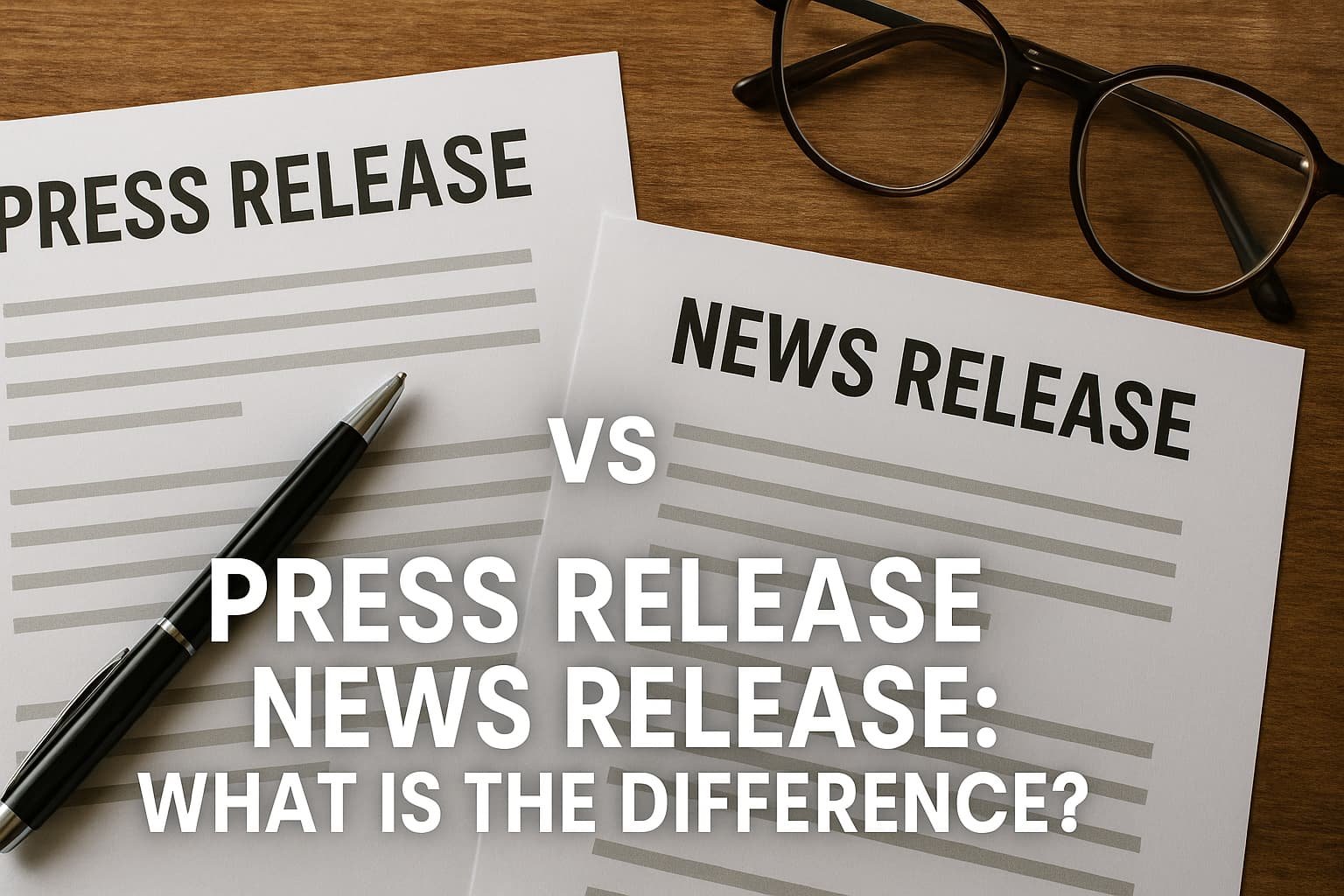
Press Release vs News Release: What is the Difference?
If you’ve ever wondered whether a press release and a news release are the same thing, you’re not alone. Even seasoned marketers and PR professionals use these terms interchangeably. But while they overlap, there are subtle distinctions worth noting, differences that can shape how your message is received and where it lands.
Understanding these nuances matters. For businesses, startups, and agencies, the wrong format can mean your announcement gets overlooked by journalists or fails to resonate with the public. In this guide, I’ll break down press release vs news release, clarify when to use each, and help you decide which format best fits your communication goals.
What is a Press Release?
A press release is a structured, formal communication designed to announce something specific and significant. Think of it as the corporate world’s way of saying: “Here’s newsworthy information that journalists will care about.”
- Definition: A standardized document created by companies or organizations.
- Purpose: Product launches, financial results, mergers/acquisitions, or official company milestones.
- Audience: Journalists, investors, analysts, and media professionals.
- Format: Clear sections; headline, subhead, dateline, body paragraphs, quotes, boilerplate, and media contact info.
- Distribution: Typically sent via press release distribution services or PR wires (like PR Newswire or Press Advantage).
If you’re new to writing press releases, our guide on 10 proven strategies for writing press releases offers actionable tips to craft announcements that actually get picked up.
What is a News Release?
A news release, on the other hand, leans broader and more public-facing. Instead of rigid structure, it often prioritizes storytelling or community relevance.
- Definition: A flexible communication designed to update or inform audiences.
- Purpose: Announcements about community involvement, CSR initiatives, local events, or general updates.
- Audience: The general public, online readers, and local media.
- Format: Less formal than a press release; may be shorter and conversational.
- Distribution: Shared on websites, blogs, social media, or sent to local news outlets.
For example, if your business opens a new store location or hosts a charity drive, a news release might be the better fit.
Press Release vs News Release – Key Differences
Here’s a side-by-side breakdown to make the differences clear:
Aspect Press Release News Release Purpose Formal corporate communication Public-facing updates & storytelling Tone/Style Structured, AP-style Flexible, casual, or narrative Audience Journalists, media professionals, stakeholders General public, online audiences, local media Format Standard template (headline, body, boilerplate) Variable; shorter, more creative Distribution PR wires, databases, press release services Websites, blogs, social media, local press Still confused? Think of it like this:
- A press release is for the newsroom.
- A news release is for the community.
When to Use a Press Release
Use a press release when credibility and professionalism matter most:
- Announcing product launches or new services
- Sharing quarterly/annual financial results
- Communicating mergers, acquisitions, or legal updates
- Building trust with investors or media outlets
If your release requires AP-style precision, our guide on formatting a dateline in AP style breaks down the rules journalists expect.
When to Use a News Release
A news release shines when the goal is awareness or community engagement:
- New store openings or partnerships
- CSR initiatives and charity events
- Local or regional updates that customers care about
- Stories where tone and relatability matter more than strict structure
If you’re running an event, a news release can work hand-in-hand with a press release for an event to cover both media and public audiences.
Press Release vs Media Release – Are They the Same?
Here’s where it gets trickier: the term media release is often used interchangeably with both.
- In the U.S., press release is the dominant term.
- In other regions (like Australia), media release is more common.
At the end of the day, the terminology isn’t as important as understanding the audience and purpose.
Which is More Effective for Your Business?
The answer: it depends on your goal.
- Use a press release when you want to establish authority, target journalists, or ensure your story gets picked up by news wires.
- Use a news release when you want to connect directly with the public, customers, or local audiences.
- Better yet: combine both. A press release gets media attention, while a news release amplifies it across owned channels.
As PR evolves, the line between the two is blurring especially with press release distribution services that push content across search engines, social platforms, and even AI-driven search results.
Final Thoughts
At the end of the day, whether you write a press release or a news release, your goal is the same: get your story noticed.
- A press release brings structure and authority.
- A news release brings flexibility and relatability.
- Together, they amplify your reach and strengthen your brand.
Whether you’re writing a press release to capture media attention or a news release to engage the public, the real key lies in effective distribution. That’s where Press Advantage steps in. Our platform ensures your announcements aren’t just published—they’re indexed on Google, amplified on social media, and positioned to appear in AI-powered search results.
👉 Book a free demo today and see how Press Advantage can help your business turn every release into measurable visibility, authority, and growth.
-

TikTok-Trend “Boysober”: Viele Frauen haben keine Lust mehr auf Dating | hessenschau
Keine Lust mehr auf Ghosting, mentale Belastung und alte Rollenbilder: Immer mehr Frauen entscheiden sich bewusst gegen …
source -

Dating In The Bay Area As A Man, Woman
Dating In The Bay Area
Dating in the Bay Area can be difficult. I have been working with single folks for over a decade: offline and online, men and women, young and old, introverts, BIPOC, engineers and professionals – I have seen it all.
If you do a search, you will get dozens and dozens of threads about this on Quora, Reddit, Blind and more. Relying on these forums can be like the blind leading the blind as most people who spend time on these sites tend to be more jaded, bitter than the average person.
There are many things that make dating in the Bay Area fairly unique relative to other areas of the country such as:
- High number of advanced degrees
- Dependency on dating apps
- Lack of time
- Introverted personalities
- Diversity
- Work from home
- Massive shifts during pandemic (friends relocating, break-ups)
You might be thinking that some of these items would be a plus but not always. I’ll dig into some of the realities, nuances of dating in the Bay Area, debunk some classic myths and provide some tips on how to better navigate the dating waters here.
Check out my modern dating blog digging into trends, data, biases, frustrations, reader questions and more. Hosted on Substack, it has over 6,000 subscribers and counting.
Related reads:
Dating Services Bay Area (Matchmakers, Singles Events)
The number of ways people try to meet in the Bay Area are many ranging from:
- Speed Dating
- Singles Events
- Matchmakers
- Dating Apps/Sites
- Date Me Docs
The number of people who defer to these alternative methods rather than chat up people are bars, cafes, events and more is crazy. It’s like people forgot how to have casual conversations and meet people in person in organic settings, events and situations. Of course this is not everyone, those who do have and easier time dating (unless they don’t know how to read people, set boundaries and cut off time wasters).
I am not against any of these outlets to meet people but the problem I see again and again is that it’s less about the locations, outlets and more about the person that holds them back, makes it hard to date including: unrealistic expectations, inability to read people/cut off time-wasters, lack of social skills, lack of friends, not ready to date or not considering other people’s preferences/deal-breakers.
-

Twins Blind Dating 6 Guys
Blind dating the Ernst twins… these boys weren’t ready. *Click Here for the UNCENSORED/EXCLUSIVE content from this …
source -
Love Isn’t Blind, It Has Its Eyes on Politics | by OkCupid
But it’s not just reproductive rights shaping the dating landscape. Marriage equality remains a top issue for singles, with 96% of 18-to-25-year-olds and 97% of 26-to-35-year-olds supporting it. Across all genders, 97% of women and 96% of men are aligned on this issue. When it comes to LGBTQ+ rights more broadly, 74% of Gen Z daters and 78% of Millennials on OkCupid actively advocate for the cause.
The #MeToo movement has also left a lasting imprint on dating expectations. Over three quarters of women (77%) and more than half of men (51%) wouldn’t date someone who doesn’t support the movement. The generational divide is equally telling: 55% of 18-to-25-year-olds, 68% of 26-to-35-year-olds, and 66% of 36-to-45-year-olds on OkCupid say that support for #MeToo is a dating prerequisite.
Gender equality is another major non-negotiable. A striking 86% of women and 67% of men say they couldn’t date someone who doesn’t support gender equality. When it comes to women’s rights more broadly, those numbers jump to 90% of women and 70% of men. Silent support isn’t enough either — 52% of women on OkCupid say that speaking out about racial equality is essential, not optional.
So, what does this tell us? Compatibility isn’t just about shared hobbies or whether you both love the same Netflix show. Today’s singles are seeking alignment on core values — issues that define how they engage with the world. Love isn’t blind; it’s politically conscious. And for many, the question isn’t “Do you believe in love?” — it’s “Do you believe in equality?”