If you live outside London and have been wondering whether a dating agency outside London can genuinely deliver, the direct answer is yes – provided you choose the right service and approach the brief correctly. The London-centric reputation of UK matchmaking is largely a marketing artefact rather than a reflection of where these agencies can actually find you a match.
I’m James Preece, independentdating coachwith over 20 years of experience working with clients across the entire UK, not just the capital. Here is what genuinely matters if you are based outside London and considering professional matchmaking.
KEY TAKEAWAYS
A dating agency outside London can work extremely well, but the agency needs genuine database depth and active headhunting capability in your region – not every service that claims national coverage actually has it.
Most UK matchmaking agencies are based in or around London, but their membership and search capability often extends well beyond the capital – the key is verifying this before you join.
Dating agency outside London clients often get better results by framing their geographic brief generously from the outset rather than restricting the search to their immediate area.
Knowing the right questions to ask about regional coverage before committing saves significant time and money.
Why London Dominates the Matchmaking Industry’s Image
It is true that the majority of UK matchmaking agencies are headquartered in London, and their marketing tends to reflect this – imagery of city professionals, references to West End dinners, language built around the London dating scene. This creates a reasonable but ultimately misleading impression that the service is really only built for London clients.
The reality is more nuanced. Most established national agencies have members across the entire UK, not just the capital. The London-centric branding reflects where the agency’s office and largest concentration of clients happen to be, not the limits of where they can actually search and introduce.
That said, the impression is not entirely unfounded either. Database depth genuinely does vary by region, and an agency with thousands of members might still have relatively thin coverage in, say, the North East or rural Wales. The honest picture for a dating agency outside London prospect is: the model can work very well, but verifying genuine regional depth before joining matters considerably more than it does for a London-based client.
What to Establish Before You Join
A handful of specific questions will tell you whether a particular agency genuinely serves your area well, rather than simply claiming to.
How many active members do you currently have within a reasonable distance of where I live? Ask for an actual number specific to your region, not a reassurance about national coverage. The gap between these two answers tells you a great deal.
What is your active headhunting process for clients in regions with thinner database depth? A good answer describes a specific methodology for identifying and approaching potential partners beyond the existing membership. A vague answer suggests the agency has not thought carefully about clients outside its primary catchment.
Are you genuinely prepared to introduce me to compatible people in nearby major cities as part of my search? The answer should be an enthusiastic yes. Hesitation here is a meaningful signal.
Have you successfully placed clients from my specific region before? A specific, credible answer with some detail is far more reassuring than general national success claims.
For an independent comparison of which UK agencies have genuine regional coverage and headhunting capability, thebest dating agencies in the UK ranked hereis worth reading before any consultation.
Framing Your Geographic Brief Properly
This is the single most important practical adjustment for any dating agency outside London client, and it is something most people get wrong by default.
The instinct is to think locally – to imagine your search confined to a tight radius around home, the way the dating apps surface only nearby profiles. Professional matchmaking does not need to work this way, and treating it as though it does artificially limits your options before the search has even started.
A well-briefed search frames your nearest major city, and often several cities within a reasonable travelling distance, as a natural extension of your search territory. Someone based in a regional city is often within an hour or two of several other significant population centres – and a partner worth meeting from one of those cities is not a compromise. It is simply someone worth a journey.
The clients who get the best results living outside London are consistently the ones who establish this generous framing with their matchmaker from the very first conversation, rather than discovering their own flexibility only after a promising introduction happens to land slightly further away than expected.
The Agencies Worth Considering
A handful of UK agencies have particularly strong track records serving clients beyond London.
Drawing Down the Moon, from £12,000, has four decades of experience and a consultation-led, values-based matching philosophy that is less dependent on tight geographic clustering than some newer services. You can read ourDrawing Down the Moon review here.
Maclynn, from £25,000, is particularly well suited to clients outside London whose requirements are specific enough to benefit from active headhunting – their search model is built around finding the right person regardless of whether they are already in the database, which matters more when the local pool is naturally thinner. You can read ourMaclynn review here.
Club Introductions, from £1,000, offers a genuinely national pool of vetted singles with a self-directed model, making it an accessible starting point for clients outside London who want to test the matchmaking model before committing to a premium service. You can read our Club Introductions review here.
Cupid in the City, at around £5,000, combines psychology-led matching with a team that includes headhunters as well as database matchmakers, giving them some active search capability at a mid-range price point. You can read ourCupid in the City review here.
What Regional Clients Should Expect
A dating agency outside London search typically takes slightly longer to produce a first introduction than the equivalent search for a London-based client, simply because the immediate local pool is smaller. This is worth setting realistic expectations around rather than treating as a sign the agency is underperforming.
Once the geographic brief has been properly widened to include nearby cities, the gap in results between London and regional clients narrows considerably. Many regional clients ultimately find the experience just as productive as their London counterparts, provided the agency has genuine coverage and the brief reflects sensible geographic flexibility from the outset.
It is also worth noting that some clients outside London actually report a more positive experience than their London peers, simply because the agency’s regional client base, while smaller, tends to be more genuinely committed – people who have specifically sought out a service knowing it would require some geographic flexibility tend to be unusually serious about finding a relationship.
The Bottom Line
Dating agency outside London clients are not second-class members of a London-first system, provided they choose an agency with genuine regional depth and approach their brief with sensible geographic openness. The combination of the right agency and the right framing produces results that compare favourably with anything available in the capital.
The mistake to avoid is assuming that living outside London rules out professional matchmaking, or settling for an agency simply because it claims national coverage without verifying what that actually means for your specific area.
Wondering Which Agency Genuinely Covers Your Region?
I’ve worked with clients across the entire UK for over 20 years, not just London, and I know which agencies have genuine regional depth and which ones are stronger on marketing than coverage. My advice is completely free and completely independent. Book a call before you commit to anything.
“What is this showing me, and what am I going to do about it?”
That doesn’t mean pretending that everything that happens to you is your fault.
It isn’t.
People hurt us. People disappoint us. Relationships end. We experience loss, rejection, betrayal and circumstances that are completely outside our control.
But there is a difference between being a victim of something that happened to you and allowing yourself to remain a victim of it.
And sometimes, owning your shit means being brave enough to recognise the difference.
Stop being a victim
The word victim can be uncomfortable, but I’m not using it to dismiss genuine experiences of hurt or trauma.
I’m talking about the mindset of:
“This always happens to me.”
“There’s nothing I can do.”
“It’s because of them.”
“If they changed, I’d be happy.”
“I can’t move forward because of what happened.”
When we live there for too long, we give away our power.
Because if everything is somebody else’s fault, then the solution is always outside of us.
And that leaves us waiting.
Waiting for them to apologise.
Waiting for them to change.
Waiting for someone to choose us.
Waiting for life to become easier.
Waiting to feel confident.
Waiting for the perfect time.
How long do you want to wait?
At some point, you have to take your power back.
Your life is a mirror
One of the most powerful questions you can ask yourself is:
“What is my life showing me about me?”
Your life isn’t necessarily a perfect reflection of you. Bad things happen to good people, and you cannot control other people’s behaviour.
But your patterns can be a mirror.
Look at the relationships you repeatedly find yourself in.
Look at the people you allow close to you.
Look at the boundaries you have — or don’t have.
Look at the things you tolerate.
Look at the promises you make to yourself and don’t keep.
Look at where you repeatedly abandon your own needs.
Look at where you say yes when every part of you is screaming no.
Look at the things you complain about but never change.
Sometimes the mirror isn’t particularly flattering.
But that’s okay.
The purpose of looking in the mirror isn’t to criticise yourself. It’s to see clearly.
What you tolerate teaches people how to treat you
If you repeatedly accept behaviour that hurts you, you can’t control whether somebody continues doing it.
But you can control whether you continue participating in the relationship.
That’s the difference.
You can’t make someone respect your boundaries.
You can decide what you will do when they don’t.
You can’t make someone communicate.
You can decide whether poor communication is acceptable to you.
You can’t make someone love you in the way you need.
You can decide whether you’ll stay somewhere where your needs aren’t being met.
That’s ownership.
Not blame.
Choice.
Stop outsourcing your happiness
How often do we make our happiness conditional?
“I’ll be happy when I meet someone.”
“I’ll feel confident when I lose weight.”
“I’ll relax when work gets easier.”
“I’ll be okay when they finally realise what they’ve done.”
“I’ll start living when everything is sorted.”
But what if your life doesn’t need to be perfect before you allow yourself to enjoy it?
What if you stopped waiting for someone else to rescue you?
What if you stopped looking outside yourself for the validation, confidence and approval that you’re capable of developing within yourself?
This doesn’t mean you don’t need people.
We absolutely do.
Connection matters. Love matters. Support matters.
But your emotional wellbeing cannot permanently sit in somebody else’s hands.
Own your patterns
Maybe you keep choosing unavailable people.
Maybe you keep putting everyone else first.
Maybe you avoid confrontation and then feel resentful.
Maybe you don’t ask for what you need because you’re afraid of being rejected.
Maybe you stay too long.
Maybe you leave too quickly.
Maybe you constantly tell yourself you’re not good enough.
Maybe you keep saying you’re going to change something and then talk yourself out of it.
Whatever your pattern is, don’t shame yourself for it.
Get curious about it.
Ask:
Why do I keep doing this?
What am I getting from this pattern?
What am I afraid would happen if I changed it?
What would I do differently if I truly believed I was worthy of better?
Those questions can change everything.
Taking responsibility is not self-blame
This is where I think we sometimes get responsibility wrong.
Taking responsibility doesn’t mean:
“Everything that happened to me was my fault.”
It means:
“I am responsible for what I do with what happened.”
You didn’t necessarily choose the circumstances.
But you get to choose your next chapter.
You can learn.
You can heal.
You can set boundaries.
You can ask for help.
You can apologise.
You can forgive yourself.
You can leave.
You can begin again.
You can stop repeating the same story.
Your past explains you. It doesn’t have to define you.
There may be very good reasons why you became the person you are.
Perhaps you learned to keep the peace.
Perhaps you learned not to trust people.
Perhaps you learned that your needs weren’t important.
Perhaps you became the person who could cope with everything.
Understanding where your patterns came from is incredibly valuable.
But eventually, there comes a point where understanding has to become action.
You can say:
“I understand why I do this — and I’m ready to do it differently.”
That’s growth.
So, own your shit.
Look honestly at your life.
Not with shame.
Not with judgement.
Not with “What’s wrong with me?”
But with:
“What is this showing me?”
If you’re unhappy, what can you change?
If you’re lonely, where could you create more connection?
If your relationships keep following the same pattern, what part are you playing?
If you’re constantly exhausted, where are you overgiving?
If you don’t like the way you’re being treated, what boundaries need to change?
And if you keep saying “I can’t”, ask yourself:
“Is that actually true — or is it simply what I’ve become used to believing?”
Because sometimes the most uncomfortable person to confront isn’t the person who hurt you.
It’s yourself.
And paradoxically, that can be the most liberating confrontation of all.
Because once you stop waiting for everybody else to change, you discover something incredibly powerful:
You have choices.
Your life doesn’t have to stay the way it is.
You don’t have to keep repeating the same relationships.
You don’t have to keep accepting the same behaviour.
You don’t have to remain stuck in an old version of yourself.
You don’t have to be defined by what happened to you.
Own your choices. Own your patterns. Own your boundaries. Own your future.
Stop handing your power away.
Stop waiting for somebody else to fix your life.
Stop living from the belief that you’re powerless.
Take a good, honest look in the mirror.
And then ask yourself:
“What am I going to do differently?”
Because your life may not be entirely within your control.
But your response to it is where your power begins.
Book your one to one coaching session to help you move forward and get the best out of your life, take new action, begin a new chapter, being brave, being the adult you.
Have you ever fantasized about the Hugh Hefner lifestyle?
Picture it: you’re an older guy, walking into high-status venues or hosting elite gatherings, surrounded by a rotation of stunning, energetic 20-something women who are genuinely excited to be in your orbit.
Most men assume this lifestyle is reserved strictly for tech billionaires, Hollywood producers, or guys born into royalty. They think, “If I don’t have a $50 million mansion or a private jet, why would young models want to hang around me?”
Here is the truth: You don’t need a billion dollars to create the Hugh Hefner Effect.
As a 43-year-old guy who regularly constructs these exact dynamics, I’m going to reveal the step-by-step “lifestyle setup” system that allows any mature man to build a high-status social circle of young, attractive women.
CRITICAL PRE-REQUISITE:
Before we touch the mechanics, understand this: No lifestyle system can fix weak internal confidence.
Think of this process like high-level marketing and sales. If your “product”, meaning your foundational mindset, body language, and masculine presence is lacking, throwing women into your funnel only leads to immediate buyer’s remorse.
Build your personal foundation first; use this strategy to amplify it.
Step 1: Fill the Funnel (Lead Generation)
To build a high-status social circle, you must treat your social life like a pipeline. You need a steady stream of new connections coming in through multiple channels.
In-Person Approaches: Walk up, start dynamic conversations, and exchange contact information with women you meet throughout your daily life—cafes, high-end venues, and events.
The “Friendship Pivot”: If you meet an attractive woman who isn’t a direct romantic fit, keep her in your circle anyway. Beautiful women know other beautiful women. Befriending well-connected women expands your organic reach exponentially.
Outsource Online Dating: Set up a system (or use an automated dating workflow with a virtual assistant) to handle the repetitive swiping, matching, and initial scheduling across dating apps so your inbox fills up on autopilot.
Leverage Existing Events: Attend high-end networking mixers, gallery openings, and venue launches. Focus on connecting socially rather than hunting for individual dates.
Step 2: The Barter System (Leveraging Capital)
You don’t need to drop $10,000 on a VIP table or own a $5 million yacht to host a high-status gathering. You just need to understand The Value Barter System.
Ultra-wealthy men usually have access to incredible assets—penthouses, yachts, luxury villas, and VIP club tables but they often lack one crucial element: a vibrant, energetic social atmosphere filled with attractive people.
Connect with high-net-worth venue owners or hosts. You bring the curated social energy and stunning guests; they supply the venue, luxury environment, and logistics. Both parties win, and your personal capital expenditure stays minimal.
Step 3: Execute the High-Status Event
Once the location is secured, it’s time to activate your funnel.
Systematize Invitations: Have your virtual assistant or team reach out to your contact list with clean, professional details about the upcoming event.
Set Clear Expectations: Frame the event as an exclusive, high-energy social gathering rather than a standard “date.”
Host with Presence: On the day of the event, step into the role of the master of ceremonies. Connect people, maintain high group energy, and let the social proof of the room do the heavy lifting for your personal attraction.
Step 4: The Aftermath & The “FOMO” Loop
The event doesn’t end when the lights go up. The most powerful phase happens in the 48 hours following the gathering.
Capture crisp, high-quality photos and short video clips during the event. Share them across your social media channels and tag attendees.
This creates a powerful FOMO (Fear Of Missing Out) feedback loop:
Women who attended post about the incredible experience, cementing your status as a high-value host.
Women in your funnel who didn’t attend see the social proof, making them significantly more eager to join the next invitation.
Your outreach response rates double because your lifestyle speaks for itself.
What Happens When She Asks About Your Age?
Building a dynamic lifestyle circle with younger women naturally leads to one specific question during conversation: “So… how old are you?”
If you hesitate, get defensive, or try to hide your age, you instantly destroy your masculine authority. Mature age is an advantage—if you frame it correctly.
If you want to master these high-status mindsets and become the man that women chase, click the banner below to learn more about our live coaching program.
Want Live Coaching? Book a free 15 Minute Consultation Call
Our Instagram director, Kate, posted a video of this date idea last week, and the second I watched it, I texted my husband:
“We’re doing this Friday.”
Here’s what sold me: it costs nothing, takes about four minutes to set up, and uses something you’re already holding in your hand right now- your phone.
Specifically, the thousands of photos sitting in your camera roll that you haven’t looked at since the day you took them. 😂
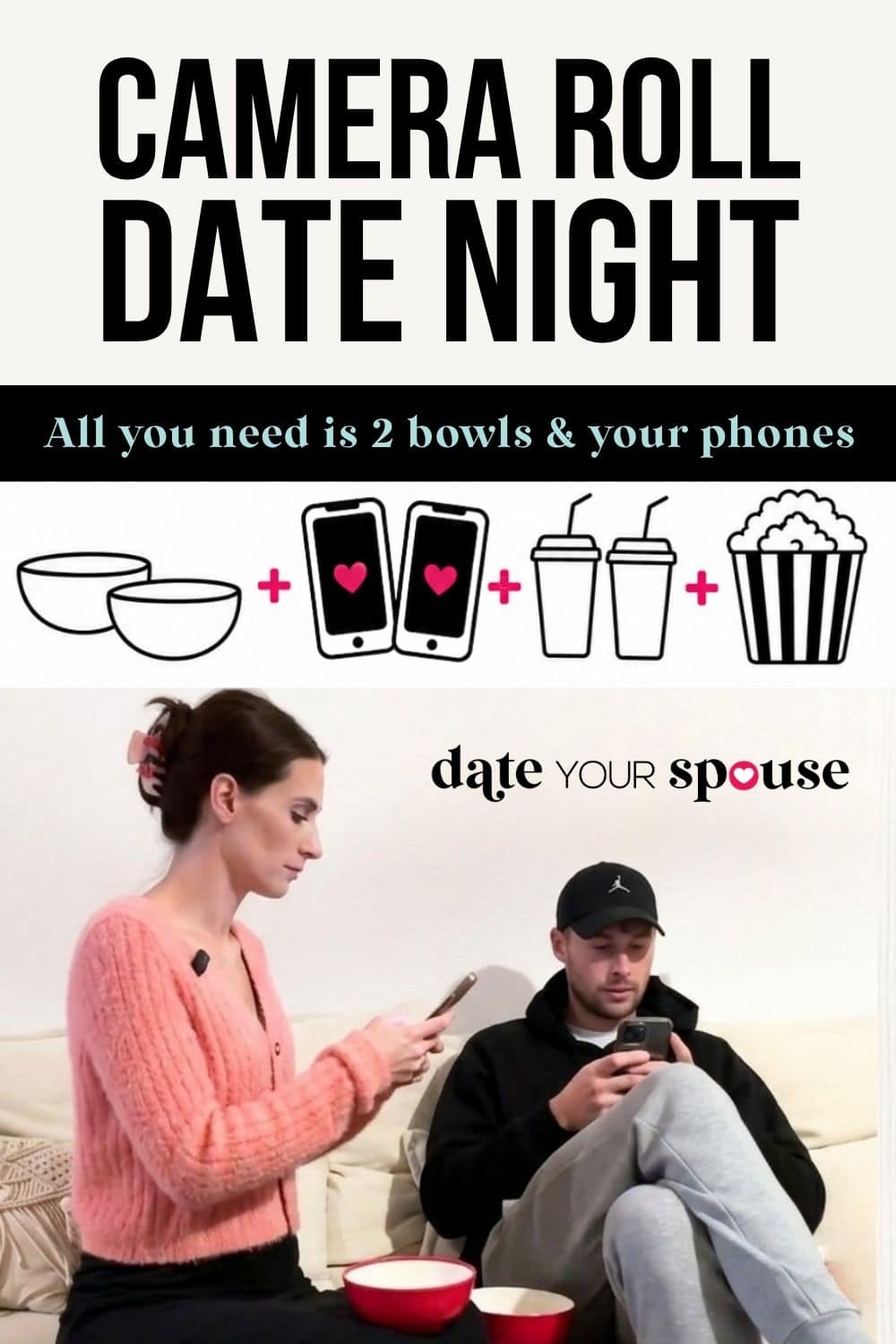
We call it the Camera Roll Date Night, and it is SO simple- but ridiculously fun.
It’s one of those dates you can squeeze in even if you only have 10 minutes. But when my husband and I tried it, we had so much fun strolling down memory lane that our “quick” date turned into over an hour of laughing, reminiscing, and saying, “Oh my gosh, remember this?!”
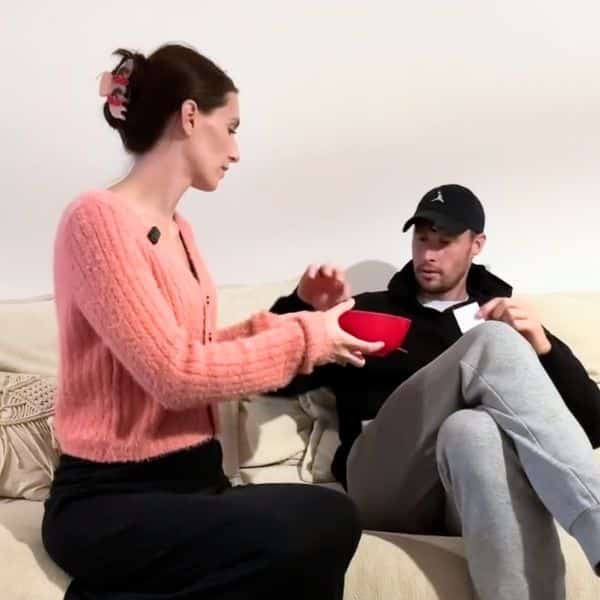
Watch Kate and her husband Ryan play it below- then keep reading for the full how-to, 60+ category ideas, and your free date night invitation.
What Is the Camera Roll Date Night?
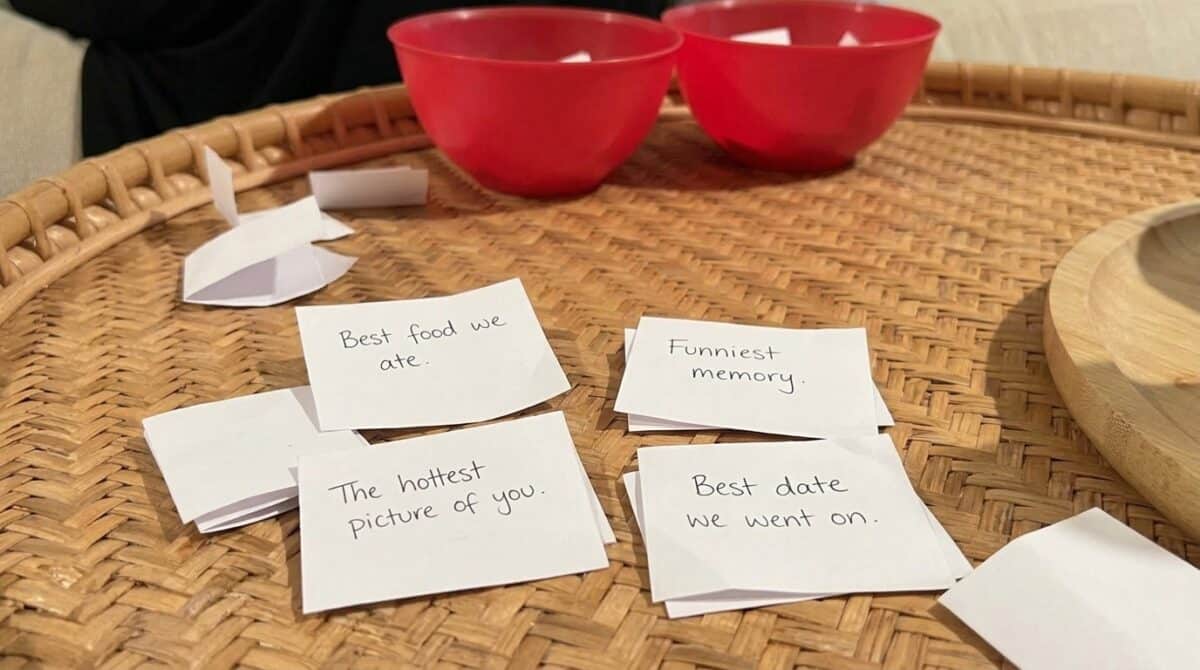
The Camera Roll Date Night is a free at-home date where you and your spouse draw a year out of one bowl and a category out of another, then you each go find the photo in your phone that best fits– like “best food we ate” from 2020, or “funniest memory” from 2016. You scroll separately, share your chosen photos one at a time, and then you draw again. That’s it! That’s the whole game.
You’ll also see it called the two bowl date night, the memory lane date, or the photo scavenger hunt date– it’s been floating around TikTok and Instagram without one agreed-on name. Whatever you call it, the game rules are the same, and the reason it works is the same too: you and your spouse will almost never pick the same photo.
That’s the magic. You lived the same year. But you took different photos and remember completely different things about it. It’s such a fun way to share your memories and reminisce.
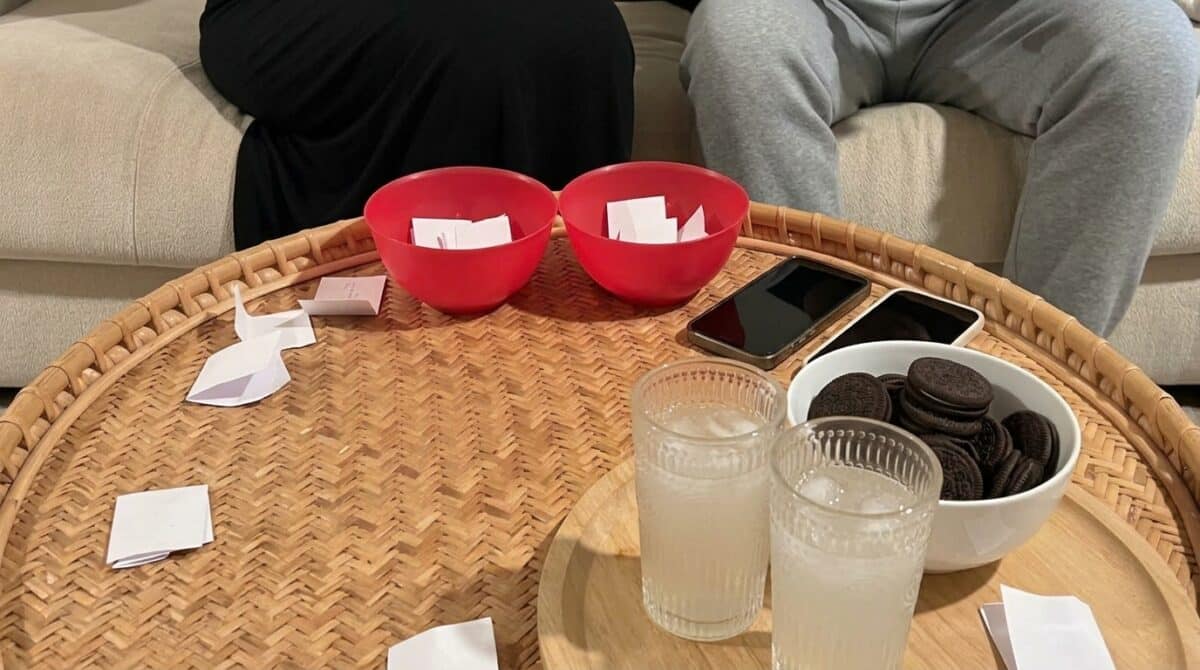
What You Need for a Camera Roll Date Night
I promise you own all of this already:
Two bowls — cereal bowls, two coffee mugs, a baseball hat and a Tupperware. It doesn’t matter.
Paper — printer paper cut into strips, index cards, or sticky notes.
A pen — or pencil.
Both of your phones — this is one of the few date nights where I’m going to tell you to keep your phone out.
Snacks and drinks — this is non-negotiable for us when it comes to date night. Pick your favorite: popcorn, ice cream, a charcuterie board, your favorite soda in an actual glass.
Somewhere cozy to sit close — couch, bed, floor by the coffee table, kitchen table with the lights down and candles lit.
Total cost: $0. Total prep: about 4 minutes. No babysitter, no reservation, no pants required.
INVITE YOUR SPOUSE TO DATE NIGHT With a flirty invitation
You could just say “hey, want to look at old pictures tonight?” But that sounds boring. Where’s the fun in that?
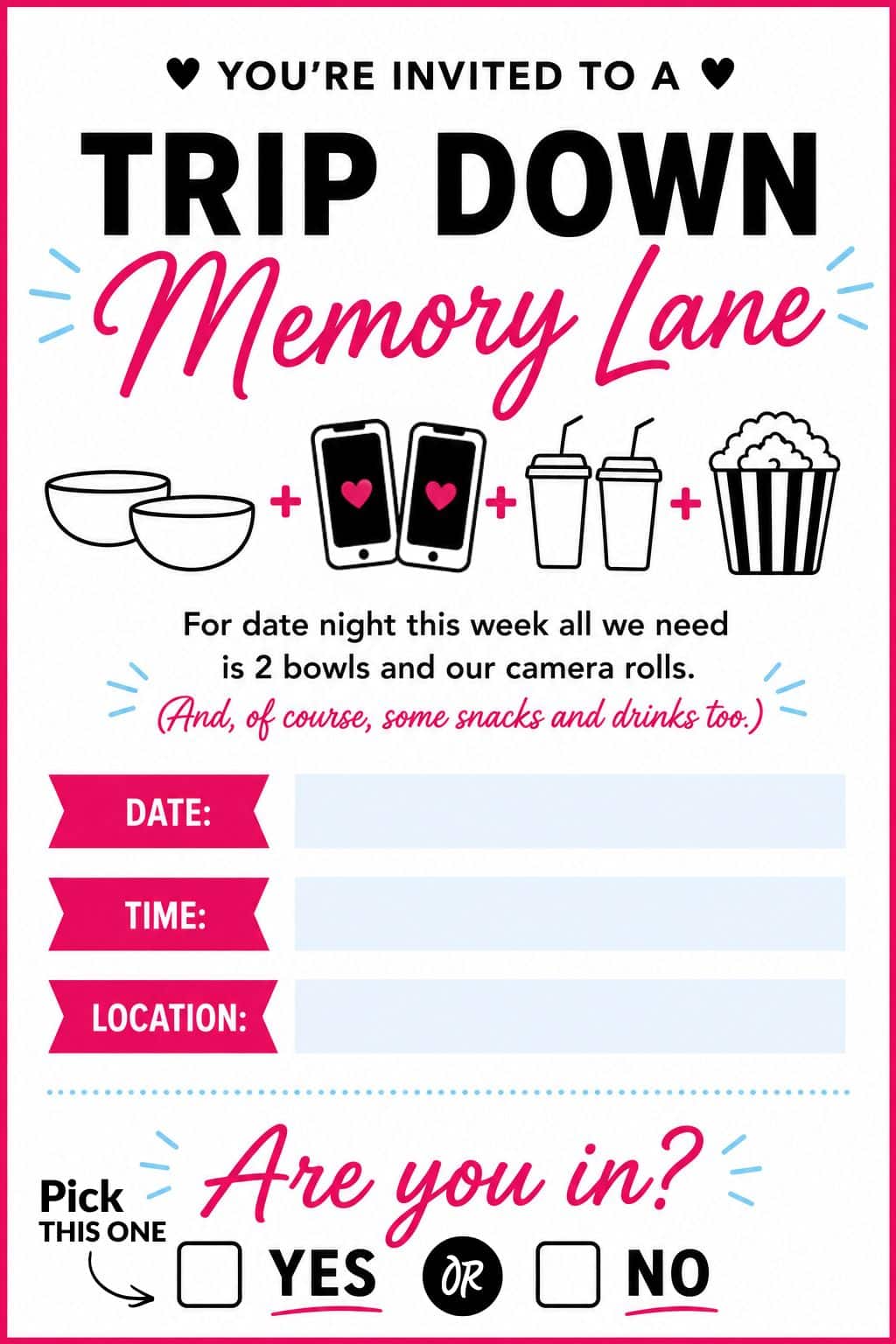
Free Camera Roll Date Night invitation
That’s why we made you this FREE date night invitation. It teases the night without giving away all the details. Just fill in the day, time, and place, then either text it to them that morning or print it and leave it somewhere they’ll find it– taped to the coffee maker, tucked in a laptop bag, or on the steering wheel.
The little things like this are what turn “hanging out” into an actual date. Trust me: the anticipation is half the fun.
How to Play the Camera Roll Date Night
Fill bowl #1 with your years. Write one year per slip of paper — every year you’ve been together. That can be every year you’ve been married, or all the way back to the year you started dating. Fold them up and drop them in.
Fill bowl #2 with your categories. Best vacation. Best food we ate. Funniest memory. Proudest moment. (We’ve got 60+ ideas for you below, so you don’t have to think of a single one yourself.) Fold and drop.
Mix them up. Give both bowls a good shake. This part is weirdly satisfying.
Draw one slip from each bowl and read it out loud.“Best food we ate… 2020.” Now you both have your assignment.
Go find your photo — separately, no peeking. Scroll to that year in your camera roll and pick the one picture you think nails the category. Give yourselves a couple of minutes. No showing, no hints, no “wait, is this the one you’re doing?”
Take turns sharing. Hold up your phone, show your photo, and tell the story behind why you picked it. Then the other person goes. This is the actual date. Everything else is just the setup.
Draw again. And again. Keep going until you run out of snacks, the baby starts crying, or you realize it’s midnight. All three are normal outcomes.
Pro tip for the scrolling part: you don’t have to thumb through four thousand photos. On an iPhone, open Photos and tap the Years view to jump straight to the year you drew. In Google Photos, just type the year into the search bar. Ten seconds instead of ten minutes. You can also use the search for categories like: food, buildings, baby, etc.
60+ Category Ideas for Your Second Bowl
This is the part that makes or breaks the date, so we did the brainstorming for you. Pull 15 to 20 from this list, mix a few from every group, and you’ve got a bowl that’ll lead to the best conversations!
The Favorites
Best vacation we took
Best food we ate
Best day of the whole year
Best date we went on
Favorite place we went
Best purchase we made
Best thing that happened to us
Favorite weekend
Best gift one of us gave the other
Best sunset or view
The Funny Ones
Funniest memory
Worst haircut
Biggest fail
Most chaotic moment
Worst outfit either of us wore
Ugliest selfie
Worst picture you ever took of me
A photo that makes zero sense out of context
Something that went hilariously wrong
A picture I definitely didn’t know you were taking
Most unflattering group photo
The Sweet Ones
Proudest moment
A day I’d relive exactly as it was
When you looked the happiest
A quiet ordinary moment I loved
A moment I felt closest to you
Something we celebrated
A tradition we started
The picture that best sums up this year
Someone who mattered to us that year
The Real Ones
Hardest season we walked through
A prayer that got answered
A risk we took
Something we survived
A time you showed up for me
Something we worked really hard for
A goodbye
A big change we made
The Flirty Ones
Hottest picture of you
A photo that reminds me why I married you
Best you’ve ever looked
A moment I was really proud to be with you
Our best photo together
A night I didn’t want to end
A moment I fell in love with you all over again
The best outfit you wore all year
The Family Ones
Best memory with our kids
A moment I was proud of one of our kids
Funniest thing one of the kids did
Best family photo
Worst family photo
Best picture of our pet
A holiday I want to remember
Time with people we love
The Random Ones
Weirdest photo in my camera roll
Most random screenshot
Best food photo I took and never posted
A photo of something we don’t own anymore
Best picture of the sky
A photo I took purely to prove a point
Something we made
A picture of a place we drove past a thousand times
The last photo I took that year
What Happened When We Played It
Okay, so here’s how our night actually went…
Our first draw was “best date we went on” in “2025”. And we both came back with the Segway date. Which, if you’ve read that post, was a date I surprised him with even though I was a little nervous about it. The fact that he picked that one first, out of an entire year of options, made me so happy. We decided we wanted to try it again this December when all the Christmas lights are up.
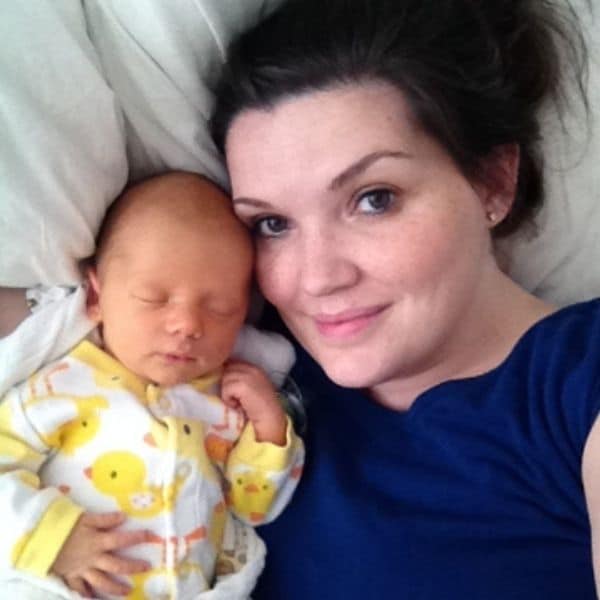
Then we drew a “A moment I fell in love with you all over again” in “2014”, which is the year our youngest was born. Scrolling back to 2014 undid me a little. Not just because of the newborn pictures. Though obviously… the newborn pictures. 🥹 It was everything around them, too. The three older kids in the background, so tiny. The house we lived in then. How exhausted we both looked in every single photo, and somehow, how happy we looked anyway.
Our oldest left for her second year of college last week, so maybe we were already feeling a little sentimental. But seeing all of us there, in that little snapshot of our life, made me realize just how much I miss those days… and how grateful I am for all the photos and memories.
My husband picked a photo I didn’t even know was on his camera roll.
That newborn baby just started Junior High- where does the time go?
We ended up scrolling memories for over an hour until the bowls were empty and then decided to watch our old home videos. We airplayed the videos my husband takes on Christmas morning every year and yes, there may have been tears.
Total cost of the evening: zero dollars. Total prep: I cut up a piece of paper.
Yet, it was one of our favorite dates. If you don’t have a lot of energy at the end of the day but still want to connect, I can’t recommend this one enough.
Tips to Make This Date Even Better
Cast it to the TV. AirPlay or Chromecast your photos to the big screen instead of hunching over two tiny screens. It turns the reveal into an event.
Set a rabbit-hole rule. Share the photo, tell the story, then move on to the next paper. Otherwise one of you disappears into 2019 for forty-five minutes. (It was me. I was the one who disappeared.)
Save the winners to a shared album as you go. Name it “Camera Roll Date Night” and add every photo you both pull up. By the end you’ve built a highlight reel of your whole marriage without trying.
Start light, then go deeper. Lead with “worst haircut,” not “hardest season.” Let yourselves warm up before you get to the tender stuff.
Let “I don’t have a photo” be a valid answer. If nothing turns up, just tell the memory out loud. Honestly, those rounds can be some of the best ones.
Don’t skip the snacks. Five minutes of setup is the entire difference between “we sat on our phones” and “you planned something for me.”
Keep the paper prompts. Stick the slips in a ziplock and do this again next year with a whole new year added to the pile. It gets better every single time.
Fun Ways to Change It Up
The Anniversary Version — do one draw for every year you’ve been married, in order, oldest to newest. It becomes a timeline of your marriage and it is so good for an anniversary night in.
The Newlywed Version — not enough years yet? Put months or seasons in bowl #1 instead. “Best food we ate… last October.”
The Long Distance Version — works perfectly over FaceTime with zero changes. Draw the slips on camera, scroll on your own phones, then hold the photo up to the lens.
The Pre-Smartphone Version — if you go back further than your camera roll does, swap in a shoebox of printed photos, or just let those rounds be storytelling rounds.
The Family Version — pull the kids in and let everyone hunt on a parent’s phone. Great for a rainy Sunday afternoon.
Camera Roll Roulette — draw a year, then skip the category bowl completely. One of you closes your eyes, scrolls, and stops on a totally random photo from that year. Whatever comes up, you both have to tell a story about it. Way funnier than it sounds, mostly because of the screenshots.
The Speed Round — 60 seconds on the clock to find your photo. Chaotic, loud, extremely fun.
The Group Date Version — three or four couples, one shared set of category slips, and everyone uses their own years. Then vote on whose photo won the round.
Why This Date Works So Well for Married Couples
Most date nights are about making a new memory. Nothing wrong with that.
But this one is about going back and noticing all the ones you already made and then filed away without ever looking at again.
Here’s what it does that I didn’t expect:
It reminds you that you have a history. When you’re deep in the logistics era of marriage (schedules, dinner, who’s picking up who) it is genuinely easy to forget that the two of you have been through things together. Ten minutes of photos fixes that fast.
It surfaces stories you’ve never told each other. You’d think after this many years there’d be nothing left. There is so much left.
It’s a conversation with training wheels. Some nights you sit down to connect and neither of you can think of a single thing to say. The bowls do that work for you.
It reframes the hard years. Scrolling back through a season you barely survived, and seeing that you’re on the other side of it, together- hits differently than remembering it in your head.
It requires nothing. No sitter, no budget, no energy, no leaving the house. On the nights when “go out” feels impossible, this is still doable.
More Free At-Home Date Nights You’ll Love
If the Camera Roll Date is your speed, you’re going to love the rest of our free, no-babysitter-required lineup:
Loved the memory-lane part?Couple’s Pictionary turns your favorite relationship memories into hilarious drawings- same nostalgia, way more terrible artwork.
Want something creative and free? The Drawing Date Night turns YouTube into your own Disney Animation Academy, including the viral describe-it-blind twist that will make you laugh until you can’t breathe.
In the mood to compete? Spouse Scattergories is a hilarious how-well-do-you-know-me game with four free printable versions.
Already have a laptop open? The YouTube Scavenger Hunt Date sends you both racing around YouTube on a series of ridiculous challenges. Quick to prep, zero cost.
And if you want dinner attached, the Paper Tablecloth Date Night turns the pizza you were already ordering into a candlelit date with games played right on the table.
Working your way through the alphabet? File this one under C for Camera Roll (or M for Memory Lane) in our Alphabet Dating list of 350+ A-to-Z date ideas.
So tonight, grab two bowls and whatever paper is closest to you, and go dig through the thousands of pictures you’ve been carrying around in your pocket and never look at.
You’ve already lived the good part. This date just makes you stop and notice it. ❤
Play it tonight, then come back and tell us in the comments: which year got you, and did you and your spouse ever pick the same photo?
Camera Roll Date Night FAQ
Tap any question to see the answer.
What is the camera roll date night?
The camera roll date night is a free at-home date for couples where you draw a year from one bowl and a category from another bowl, then each search your phone’s photo library for the picture that best fits. For example, you might draw “best food we ate” and 2020. You scroll separately, take turns sharing the photo you picked and the story behind it, then draw again.
What is this date called on TikTok and Instagram?
It doesn’t have one agreed-on name yet. You’ll see it shared as the camera roll date night, the two bowl date night, the memory lane date, or a photo scavenger hunt for couples. They all describe the same game: one bowl of years, one bowl of categories, and both spouses hunting through their camera rolls for a matching photo.
Is this the same as camera roll roulette?
Not quite, though they’re cousins. Camera roll roulette usually means scrolling to a random photo and sharing whatever you land on, with no year and no category attached. You’ll also see that name used for friend-group versions and celebrity interview segments. The camera roll date night is the structured version built for couples: you draw a specific year from one bowl and a specific category from the other, then each go hunting for the photo that fits best. Roulette is random. This is a treasure hunt. That said, a roulette round makes a great variation, and we’d recommend trying one.
What do you put in the two bowls?
Bowl one holds slips of paper with the years you’ve been together, one year per slip. That can be every year you’ve been married or every year since you started dating. Bowl two holds category slips like best vacation, best food we ate, funniest memory, proudest moment, worst haircut, or hardest season. Fifteen to twenty categories is plenty for one date.
What if we don’t have photos from the early years?
Just tell the memory out loud instead. Those rounds are often the best ones because you’re relying on what you actually remember rather than what got photographed. You can also pull out a box of printed photos for the pre-smartphone years, or start your year bowl at whatever year your camera roll begins.
How long does the camera roll date night take?
Plan for about an hour, though it easily stretches to two if you get talking. Each round takes roughly five to ten minutes once you factor in scrolling and storytelling. Setup takes about four minutes, and you can stop whenever you want since there’s no set number of rounds.
How much does this date cost?
Nothing. You need two bowls, a few slips of paper, a pen, and your phones, all of which you already own. Add snacks from your own pantry and it’s a completely free date night with no babysitter required.
Can you do this date long distance?
Yes, and it works beautifully. Get on a video call, have one person draw both slips on camera, then each scroll your own phone and hold the photo up to the lens when you share. Nothing about the game needs you to be in the same room.
Is this a good anniversary date idea?
It’s one of the best. For an anniversary, skip the random drawing and go through your years in order from your first year to your most recent, pulling one category for each. It turns into a timeline of your whole marriage, and it costs nothing.
Can you do this date with kids at home?
Absolutely, that’s part of why we love it. No sitter needed. Set up after bedtime and you’re playing five minutes later. You can also do a family round earlier in the evening with the kids hunting on a parent’s phone, then save the sentimental categories for the two of you.
How do you find photos from a specific year on your phone?
On an iPhone, open the Photos app and tap the Years view to jump straight to any year. In Google Photos on Android, type the year into the search bar. Both take about ten seconds and save you from scrolling through thousands of pictures.
Reader Favorites
Our most-loved bedroom games & date-night ideas for couples:
Yes, you can love someone deeply without feeling sexually attracted to them. Romantic love, emotional attachment, sexual attraction, sexual desire, arousal, and sexual behavior are connected experiences, but they are not the same thing.
Romantic love and emotional intimacy can exist without sexual attraction.
A relationship without sexual attraction can be healthy and fulfilling when both people understand the situation, respect each other’s boundaries, and feel genuinely comfortable with the kind of intimacy the relationship offers.
Quick Answer
You can experience romantic love, emotional closeness, affection, and commitment without wanting sexual contact with someone. This may reflect an asexual-spectrum identity, a temporary change in desire, the loss of attraction to a particular partner, or simply the way your love has developed.
The more important question is not whether the love is real. It is whether both people’s needs and boundaries are compatible.
Key Takeaways
Romantic love and sexual attraction often occur together, but one does not require the other.
Sexual attraction, sexual desire, physical arousal, and sexual behavior are different experiences.
Loving someone without sexual attraction does not automatically mean you are asexual.
Asexual people can experience romantic love and have committed relationships.
A sudden loss of desire is different from never experiencing sexual attraction.
Relationships without sex can work when both partners genuinely want that kind of relationship.
Love alone cannot resolve a major difference in sexual needs.
No one should feel pressured to have sex to prove love or keep a relationship.
Honest communication matters more than trying to force attraction to appear.
Can Romantic Love Exist Without Sexual Attraction?
Romantic love and sexual attraction are often presented as parts of the same experience. You meet someone, fall in love, desire them sexually, and build a relationship. That is one common pattern, but it is not the only one.
Psychologist Lisa Diamond proposed that affectional bonding and sexual desire are functionally distinct systems. They frequently influence one another, but either can operate without the other (Diamond, 2003).
This helps explain why someone might:
want a committed relationship without wanting sex
feel sexually attracted to someone they do not love
continue loving a partner after sexual attraction changes
develop sexual desire only after emotional closeness forms
enjoy sex without experiencing strong attraction toward a specific person
feel emotionally and romantically fulfilled in a nonsexual relationship
In other words, love without sexual attraction is not a contradiction. It is one of several ways human attachment and attraction can be organized.
If these distinctions feel unfamiliar, our guide to the different types of attraction explains how romantic, sexual, physical, emotional, aesthetic, intellectual, platonic, and sensual attraction can overlap—or occur separately.
Love, Sexual Attraction, and Sexual Desire Are Not the Same
Love and sexual attraction often occur together, but one does not require the other. You can feel emotionally bonded to someone and want a life with them without feeling sexually drawn to them.
Sexual attraction is also different from sexual desire. Someone may feel attracted to a partner but have little interest in sex because of stress, exhaustion, health changes, or medication. Another person may experience libido without feeling sexually attracted to anyone in particular.
Physical arousal is different again: it is simply a mental or bodily response to stimulation. It does not automatically indicate attraction, desire, enjoyment, or consent.
Sexual behavior cannot prove what someone feels, either. People may choose to have sex for pleasure, closeness, curiosity, conception, or a partner’s enjoyment. Others may love someone deeply and choose not to have sex at all.
Why Can You Love Someone Without Feeling Sexually Attracted to Them?
There is no single explanation. Before choosing a label or making a relationship decision, it helps to identify which experience most closely resembles yours.
1. Romantic and Sexual Attraction Do Not Always Align
You may want dates, affection, partnership, emotional intimacy, and a shared future without feeling sexually drawn to the person.
This distinction is sometimes described through the split-attraction model. The model is commonly used in asexual and aromantic communities to describe romantic and sexual attraction separately.
The split-attraction model is a community-developed framework, not a clinical diagnosis or universally accepted psychological classification. However, it can give people useful language for experiences that conventional relationship terms do not describe well.
You might, for example, experience romantic attraction toward one or more genders while experiencing little or no sexual attraction. You do not need to adopt a label simply because the framework resembles your experience.
2. You May Be Somewhere on the Asexual Spectrum
Asexuality generally refers to experiencing little or no sexual attraction. It describes a pattern of attraction, not necessarily whether someone dates, falls in love, becomes aroused, masturbates, or has sex.
Asexual people may:
experience romantic love
seek committed relationships
enjoy kissing, cuddling, or other affectionate touch
have a libido without directing it toward another person
choose to have sex
prefer not to have sex
feel neutral, positive, uncomfortable, or repulsed by sexual activity
Research challenges the idea that asexuality is simply an extreme sexual desire disorder. In one comparison study, people who met measures associated with asexuality experienced less sex-related distress than participants with hypoactive sexual desire disorder (Brotto, Yule, & Gorzalka, 2015).
The distinction matters. A stable absence of sexual attraction that does not personally distress you should not automatically be treated as something broken.
Some people identify as graysexual, meaning they experience sexual attraction rarely, weakly, or only in limited circumstances. Others use demisexual for sexual attraction that develops only after a strong emotional connection.
These are established identity terms within asexual-spectrum communities. They are not medical diagnoses, and no one is required to use them.
3. You May Still Feel Attraction but Have Low Sexual Desire
Not wanting sex does not always mean sexual attraction is absent.
You may still find your partner sexually attractive but have little motivation for sexual activity because of:
stress
exhaustion
depression or anxiety
medication effects
hormonal changes
pregnancy or parenthood
physical pain
poor sleep
body-image concerns
unresolved relationship tension
fear or previous negative experiences
This is why it is useful to ask, “Am I no longer attracted to my partner?” and “Am I currently uninterested in sex in general?” as separate questions.
If sexual interest has changed suddenly, occurs across situations, or causes significant distress, consider speaking with a qualified medical or mental health professional. The goal is not to force yourself to want sex. It is to understand whether something affecting your health or well-being has changed.
4. Your Desire May Be Responsive Rather Than Spontaneous
Some people rarely think about sex out of nowhere. Their desire appears after affectionate contact, emotional closeness, or sexual stimulation begins.
This is often called responsive desire. Research on sexual response suggests that desire does not always arrive before arousal or intimacy. For some people, the process is less linear (Basson, 2001).
Responsive desire does not mean agreeing to unwanted sex and hoping desire appears. You should still feel comfortable, safe, and willing to begin.
It simply means that the absence of spontaneous desire, such as suddenly looking at your partner and wanting sex, does not necessarily prove that attraction is gone.
5. Sexual Attraction May Have Changed During the Relationship
You may have felt strong sexual attraction earlier but no longer experience it in the same way.
Attraction can change because of:
repeated conflict or resentment
emotional disconnection
a loss of trust
feeling criticized or unappreciated
unequal responsibilities
pressure surrounding sex
major life changes
familiarity and routine
changes in health or appearance
discovering more about your orientation
seeing the relationship differently over time
This does not necessarily mean the love has disappeared. Emotional attachment, loyalty, shared history, and care may remain strong after erotic interest changes.
However, love can sometimes make the situation harder to assess. You may stay because the bond is meaningful while avoiding the possibility that the relationship no longer meets either person’s needs.
6. Love May Have Become More Companionate
Some relationships gradually become centered on friendship, caregiving, trust, family, and shared life rather than sexual passion.
This is sometimes described as companionate love: a form of love built primarily on closeness and commitment. It is not automatically inferior to passionate love. For some couples, it is exactly what they want.
For others, the change creates grief. One partner may feel secure and deeply loved, while the other misses erotic connection.
The question is not whether companionate love is “real enough.” The question is whether both partners can feel fulfilled within it.
7. You May Love Them but Not Be Compatible as Romantic Partners
Love and compatibility answer different questions.
Love asks:
Do I care deeply about this person?
Am I emotionally attached to them?
Does their well-being matter to me?
Compatibility asks:
Can we build a relationship that meets both people’s important needs?
Are our boundaries and expectations workable together?
Can we accept each other as we currently are?
You can sincerely love someone and still be incompatible. That does not make the relationship fake, and it does not make either person selfish.
Does Loving Someone Without Sexual Attraction Mean You Are Asexual?
Not necessarily.
Asexuality usually describes a broader pattern of experiencing little or no sexual attraction. A lack of attraction toward one partner cannot, by itself, determine your sexual orientation.
Consider the pattern across your life:
Have you ever felt sexually attracted to anyone?
Do you experience sexual fantasies involving particular people?
Is the absence of attraction general or limited to your current partner?
Has this always been true, or is it a recent change?
Do you experience attraction only after a close emotional bond forms?
Are you personally comfortable with your pattern of attraction?
Is your distress coming from your feelings or from other people’s expectations?
You do not need to decide on a label immediately. Labels are tools for understanding and communication, not tests you have to pass.
It is also possible for how you understand yourself to change. A person might first describe their experience as low desire and later recognize an asexual-spectrum identity, or reach the opposite conclusion after exploring health, stress, and relationship factors.
Can You Love Someone and Not Want to Have Sex With Them?
Yes. Loving someone does not create an obligation to want sex.
You might enjoy conversation, emotional vulnerability, shared routines, affectionate touch, or building a future together without wanting sexual contact. Those forms of intimacy can be genuine and significant.
At the same time, “I love you” and “I want a sexual relationship with you” are separate statements. Neither should be used to pressure the other.
Someone who does not want sex is not withholding love. Someone who considers sexual intimacy important is not necessarily reducing love to sex.
The conflict usually comes from treating either person’s needs as illegitimate.
Can a Relationship Work Without Sexual Attraction?
A relationship without sexual attraction can work, but only when its actual structure is acceptable to both people.
Research involving 485 self-identified asexual people in romantic relationships found that satisfaction, investment, and perceived alternatives were associated with commitment in ways consistent with established relationship research (Brozowski et al., 2022). This suggests that asexual romantic relationships are supported by many of the same relational processes as other partnerships.
A nonsexual relationship is more likely to work when:
both partners know what to expect
neither person is secretly waiting for the other to change
affection is expressed in mutually meaningful ways
boundaries can be discussed without punishment or guilt
neither partner feels required to tolerate unwanted sexual contact
both people feel chosen and valued
agreements are freely made rather than accepted out of fear
It may struggle when:
one person feels constantly rejected
one person feels constantly pressured
sex becomes proof of love
avoiding the topic replaces honest communication
either partner minimizes their own needs to prevent a breakup
temporary compromise turns into long-term resentment
one person promises that attraction will return without knowing whether it will
There is no universal amount of sex required for a healthy relationship. The relevant issue is whether the people in that relationship feel respected and sufficiently fulfilled.
What If One Partner Wants Sex and the Other Does Not?
Differences in desire are common. Researchers often call this sexual desire discrepancy, which means partners differ in how much or how often they want sexual activity.
The lower-desire partner is not automatically the problem. Desire discrepancy exists between two people; it is not a defect located in the person who wants less sex.
A European Society for Sexual Medicine position statement recommends normalizing differences in desire, improving communication, addressing unmet relationship needs, and developing mutually acceptable expectations rather than treating one partner as broken (Dewitte et al., 2020).
Healthy responses may include:
developing forms of physical intimacy both people enjoy
discussing which sexual activities, if any, are mutually wanted
finding ways to express desire and reassurance outside sex
accepting a lower or zero frequency of sexual activity
reconsidering the relationship if important needs remain incompatible
Some couples discuss consensual non-monogamy. However, opening a relationship is not a simple repair for mismatched desire. It requires genuine interest, clear boundaries, trust, and free agreement from everyone involved. It should not be introduced as an ultimatum or accepted only to prevent abandonment.
Sometimes two loving people cannot find an arrangement that protects both partners’ well-being. Ending or redefining the relationship may then be more compassionate than continuing a cycle of pressure and rejection.
Consent Still Matters in Long-Term Relationships
No one owes sexual access to a partner, even in a committed relationship.
Consent should be freely given and can be withdrawn at any time. Agreeing because you fear anger, guilt, infidelity, or abandonment is not the same as genuinely wanting to participate.
It is also worth distinguishing among three positions:
Sex-favorable: You may not experience sexual attraction but can still enjoy or want sexual activity.
Sex-indifferent: You may feel neutral and sometimes participate for reasons such as closeness or curiosity.
Sex-averse or sex-repulsed: Sexual activity may feel unwanted, upsetting, or deeply uncomfortable.
These terms are commonly used in asexual communities. They describe someone’s relationship with sexual activity, not necessarily their orientation.
A sex-indifferent person may freely choose sex with a partner. But “I do not mind” should not silently become “I must do this to keep them.”
Before making a decision about the relationship, try to identify the pattern without judging it.
Ask Whether Attraction or Desire Is Missing
Consider:
Do I feel sexually drawn to my partner but rarely want sex?
Do I want sex generally but not with this person?
Do I feel no sexual attraction toward anyone?
Do I become interested only after affectionate or erotic contact begins?
Do I want nonsexual touch but not sexual contact?
Am I avoiding sex because it has become painful, pressured, or emotionally unsafe?
These answers point toward different experiences.
Look at the Timeline
Ask yourself:
Was sexual attraction ever present?
Did it disappear suddenly or gradually?
Did anything change around the same time?
Is the change connected to conflict, stress, medication, health, parenthood, or another life event?
Have I always confused romantic excitement with sexual attraction?
A lifelong pattern may suggest something different from a sudden change.
Separate Your Feelings From What You Think You Should Feel
Many people assume that loving a partner means they should want sex with them. When that desire is absent, they may search for hidden trauma, illness, or relationship failure even when the experience itself is not distressing.
Ask: “If no one expected sex from me, would I still feel that something was wrong?”
If the answer is no, some of your distress may be coming from social expectations. If the answer is yes, further personal or professional exploration may be helpful.
Ask Whether You Can Accept the Relationship as It Is
Do not base a major decision entirely on the hope that attraction will eventually appear.
Ask yourself:
Would I choose this relationship if nothing changed?
Am I comfortable with the intimacy I can honestly offer?
Is my partner comfortable with it?
Are either of us waiting for the other to become different?
Can we discuss this without pressure, blame, or avoidance?
These questions may be uncomfortable, but they are more useful than asking whether your feelings are “normal.”
How to Talk to Your Partner About a Lack of Sexual Attraction
Choose a calm, private moment outside sexual activity. The goal is not to deliver a verdict but to explain your current experience honestly.
You might say:
“I love you and feel deeply connected to you. I have also noticed that I do not experience sexual attraction in the way I thought I should. I do not want to hide this or make promises I cannot guarantee. I want us to talk honestly about what intimacy and a fulfilling relationship mean to each of us.”
If attraction was present before, you could say:
“My love for you is still real, but my sexual feelings have changed. I do not fully understand why yet. I would like to explore what has changed without blaming either of us.”
During the conversation:
Describe your experience instead of diagnosing yourself or your partner.
Avoid saying “you are not attractive.”
Do not promise attraction will return.
Ask what sexual and nonsexual intimacy mean to your partner.
Be specific about your boundaries.
Listen without treating their disappointment as an attack.
Pause the conversation if it becomes coercive or hostile.
Return to the topic rather than expecting one discussion to resolve everything.
A meta-analysis of 93 studies involving 38,499 people found that higher-quality sexual communication was positively associated with relationship and sexual satisfaction (Mallory, 2022). This does not mean communication can erase incompatibility. It means honest, respectful communication helps couples understand what they are actually deciding.
Can Sexual Attraction Come Back?
Sometimes sexual attraction or desire returns, but there is no reliable way to guarantee it.
Improvement may be possible when reduced interest is connected to:
chronic stress or exhaustion
unresolved resentment
emotional disconnection
pain during sexual activity
medication effects
anxiety or depression
feeling pressured
a repetitive sexual routine
lack of privacy or time
changes in physical or hormonal health
Taking pressure off sex, rebuilding emotional safety, treating pain, addressing health concerns, or creating new forms of intimacy may help in some situations.
However, attraction is not a reward for effort. A partner can become more attentive, affectionate, or physically healthy without making sexual attraction return.
Promises such as “I will eventually want you again” can create false hope. A more honest position is:
“I am willing to understand what has changed, but I cannot promise a particular outcome.”
If the lack of attraction reflects an enduring orientation or a stable personal boundary, trying to manufacture attraction may create shame rather than closeness.
When Professional Support May Help
Professional support may be useful when:
sexual desire changes suddenly
sex is painful or physically uncomfortable
medication or health changes may be involved
the situation causes significant personal distress
past trauma affects comfort with intimacy
conversations repeatedly become hostile or coercive
both partners want help negotiating different needs
you feel pressured to have unwanted sex
you want to explore your orientation in an affirming setting
Depending on the concern, the appropriate support might include a physician, licensed therapist, couples counselor, or certified sex therapist.
The goal should not be to “fix” an asexual person or force attraction toward a partner. Ethical support should help you understand your experience, protect consent, and make informed relationship decisions.
Common Myths About Love Without Sexual Attraction
“If You Do Not Want Sex, You Do Not Really Love Them”
Love can include attachment, care, trust, commitment, tenderness, and a desire to share life. Sexual desire is not the only evidence of love.
“Every Healthy Romantic Relationship Needs Sex”
Many people consider sex important, but there is no single relationship structure that suits everyone. A nonsexual relationship can be healthy when everyone involved freely wants it.
“Asexual People Cannot Fall in Love”
Asexuality concerns sexual attraction. Some asexual people experience romantic attraction and pursue relationships; others are aromantic or do not want romantic partnerships.
“Having Sex Means You Must Feel Sexual Attraction”
Behavior does not prove attraction. People have sex for many reasons, and some asexual people choose to participate in sexual activity.
“If Attraction Disappears, the Relationship Is Over”
Not necessarily. Some couples rebuild erotic connection, while others create fulfilling relationships centered on other forms of intimacy. The outcome depends on the cause, each partner’s needs, and whether a mutual arrangement is possible.
“If You Try Hard Enough, You Can Make Yourself Feel Attraction”
You can create conditions that support closeness, but you cannot guarantee a specific emotional or sexual response. Effort may improve communication and intimacy without producing sexual attraction.
“Love Should Be Enough to Overcome Different Sexual Needs”
Love can motivate two people to communicate and compromise. It cannot make every difference compatible. Sometimes acknowledging incompatibility is an act of honesty rather than a failure of love.
Frequently Asked Questions
Can you be romantically attracted to someone but not sexually attracted to them?
Yes. You may want romantic closeness, dates, commitment, and a shared future without wanting sexual contact. Romantic and sexual attraction often overlap, but they can occur separately.
Can you love your partner and not want sex?
Yes. You may continue to feel love, attachment, affection, and commitment while having little or no desire for sex. It helps to determine whether this is a stable pattern, a general change in libido, or a relationship-specific change.
Does a lack of sexual attraction mean I am asexual?
Not necessarily. Asexuality generally involves experiencing little or no sexual attraction as a broader pattern. Not feeling attracted to one partner is not enough to determine your orientation.
Is sexual attraction the same as libido?
No. Sexual attraction is directed toward a person, while libido is a broader drive or interest in sexual activity. Someone can have a libido without feeling sexually attracted to anyone.
Can a relationship survive without sex?
Yes, when both partners genuinely accept a nonsexual relationship and feel fulfilled by other forms of intimacy. It becomes more difficult when one partner considers sex essential and no mutually acceptable arrangement is possible.
Should I have sex even if I am not attracted to my partner?
Only if you freely want the sexual experience itself. You should not have sex because you feel obligated, frightened, guilty, or responsible for preventing your partner from leaving.
Can sexual attraction develop later?
It can. For some people, attraction develops through emotional intimacy or familiarity. Demisexual people, for example, may experience sexual attraction only after a strong emotional bond. However, no one should enter or remain in a relationship based solely on the expectation that attraction will eventually appear.
Can sexual attraction return after it disappears?
Sometimes. It may return when stress, conflict, pain, health issues, or emotional disconnection improve. In other situations, it does not return. There is no method that can guarantee attraction.
Is it unfair to stay with someone I am not sexually attracted to?
It is not inherently unfair if you are honest and your partner understands what you can offer. It becomes unfair when you conceal the situation, imply that change is guaranteed, or expect either person to abandon important needs indefinitely.
Should I end a relationship if there is no sexual attraction?
Not automatically. First consider whether both people can genuinely accept the relationship as it is. If one partner needs sexual intimacy and the other cannot comfortably offer it, ending or redefining the relationship may be healthier than continuing under pressure.
Summary
You can love someone without sexual attraction. Romantic attachment, emotional intimacy, commitment, desire, arousal, and sexual behavior are separate experiences, even when they commonly overlap.
The absence of sexual attraction does not automatically mean that the love is incomplete, the relationship is unhealthy, or someone needs to be fixed. It may reflect an asexual-spectrum identity, a change in desire, a relationship-specific loss of attraction, or a form of love centered on companionship and emotional intimacy.
Still, genuine love does not guarantee sexual compatibility. A healthy relationship requires more than proving that the feelings are real. Both people must be able to communicate honestly, respect consent, and accept the relationship they can actually create, not the one they hope the other person will eventually provide.